


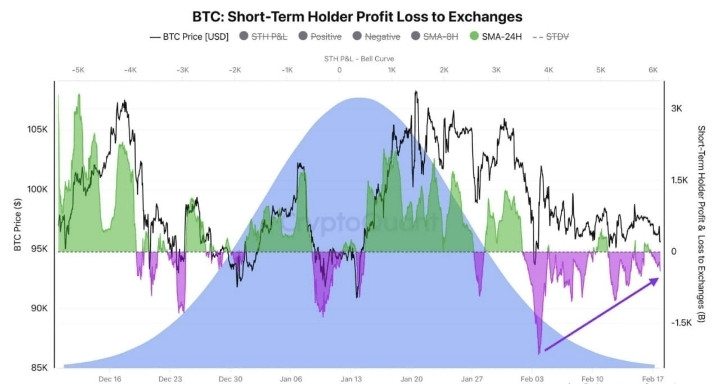
The cryptocurrency market has always been characterized by dramatic price swings, investor sentiment shifts, and evolving market dynamics. Among all digital assets, Bitcoin remains the most influential cryptocurrency, often serving as a benchmark for the broader crypto ecosystem. However, recent market developments have raised concerns among investors as Bitcoin’s high-conviction holders are turning into sellers while the cryptocurrency’s price continues to test new lows.
Historically, long-term Bitcoin holders, often referred to as “diamond hands,” have played a crucial role in maintaining market stability. These investors typically accumulate Bitcoin during periods of uncertainty and hold their positions through both bull and bear markets. Their unwavering confidence has often been viewed as a strong indicator of Bitcoin’s long-term value proposition.
Yet recent on-chain data and market trends suggest a significant shift in behavior. Many of these high-conviction holders are now reducing their positions, creating additional selling pressure at a time when market sentiment is already fragile. This development has sparked widespread debate about the future direction of Bitcoin, investor psychology, and the broader cryptocurrency market.
Understanding High-Conviction Bitcoin Holders
High-conviction Bitcoin holders are investors who maintain strong confidence in Bitcoin’s long-term prospects regardless of short-term market fluctuations. These individuals and institutions often hold Bitcoin for years, resisting the temptation to sell during periods of extreme volatility.
Such investors typically base their strategy on Bitcoin’s core fundamentals, including its limited supply, decentralized structure, and growing adoption as a digital store of value. Many of them view Bitcoin as “digital gold” and believe it can serve as a hedge against inflation, currency devaluation, and economic uncertainty.
The behavior of these holders is closely monitored because they represent a significant portion of Bitcoin’s circulating supply. When they accumulate, markets often interpret it as a bullish signal. Conversely, when they begin selling, concerns emerge regarding market confidence and future price direction.
Why Bitcoin Prices Are Hitting New Lows
Macroeconomic Pressures
One of the primary reasons behind Bitcoin’s declining price is the challenging global economic environment. Rising interest rates, persistent inflation concerns, and tighter monetary policies have reduced investor appetite for riskier assets. Cryptocurrencies, including Bitcoin, have increasingly become correlated with broader financial markets. As investors move capital toward safer investments, demand for speculative assets tends to weaken, placing downward pressure on Bitcoin prices.
Reduced Market Liquidity
Liquidity plays a crucial role in determining asset prices. During periods of economic uncertainty, institutional investors often reduce exposure to volatile markets. Lower liquidity means that even moderate selling activity can trigger substantial price declines. As market participants become more cautious, fewer buyers are available to absorb selling pressure, creating an environment where prices can fall rapidly.
Regulatory Uncertainty
Governments and regulators worldwide continue to develop frameworks for cryptocurrency oversight. While regulation can ultimately support long-term adoption, uncertainty surrounding future policies often creates short-term volatility. Concerns about taxation, exchange regulations, stablecoin oversight, and compliance requirements can discourage investment and contribute to negative market sentiment.
Why High-Conviction Holders Are Becoming Sellers

Profit Preservation Strategies
Many long-term Bitcoin investors accumulated their holdings at significantly lower prices. Even after recent declines, some remain in substantial profit. As market conditions deteriorate, preserving gains becomes a rational investment decision. Rather than risking further losses, these investors may choose to secure profits and re-enter the market later at lower price levels. This strategic selling does not necessarily indicate a loss of faith in Bitcoin but reflects prudent portfolio management.
Fear of Prolonged Market Weakness
Extended bear markets can test even the strongest convictions. When prices remain under pressure for prolonged periods, some investors begin reassessing their assumptions. The possibility of deeper corrections, slowing adoption rates, or unfavorable economic conditions can prompt long-term holders to reduce exposure. This shift often reflects changing risk assessments rather than complete abandonment of Bitcoin.
Institutional Portfolio Rebalancing
Institutional investors have become increasingly important participants in the Bitcoin market. Unlike retail investors, institutions often follow strict risk management and portfolio allocation guidelines. When Bitcoin experiences significant volatility, portfolio managers may rebalance their holdings to maintain target asset allocations. This process can result in substantial selling activity, even among investors who remain fundamentally optimistic about cryptocurrency.
The Role of On-Chain Data in Identifying Selling Trends
Blockchain technology provides unparalleled transparency into market behavior. Analysts use on-chain metrics to evaluate investor activity and identify emerging trends. Recent data has shown an increase in Bitcoin transfers from long-term storage wallets to exchanges. Historically, such movements often precede selling activity, as investors transfer assets to platforms where they can be traded.
Other important indicators include declining wallet age metrics, increased realized profits, and shifts in long-term holder supply. Together, these signals suggest that some high-conviction investors are actively reducing their positions. The availability of this transparent data enables analysts to track market sentiment more accurately than in many traditional financial markets.
How Selling by Long-Term Holders Impacts the Market
Increased Selling Pressure
When long-term holders begin selling, additional Bitcoin enters the market. If buyer demand remains weak, prices can experience accelerated declines. This increased supply often creates a challenging environment for short-term traders and can contribute to heightened volatility.
Investor Sentiment Deterioration
Market psychology plays a critical role in cryptocurrency valuation. News that long-term holders are selling can undermine confidence among retail investors. Many market participants view these experienced investors as informed and disciplined. When they begin reducing exposure, others may interpret the move as a warning sign, leading to further selling.
Potential Market Capitulation
In severe bear markets, widespread selling can lead to capitulation. Capitulation occurs when investors abandon positions due to fear, frustration, or financial necessity. While capitulation often represents a painful phase of market cycles, it can also mark the beginning of eventual recovery as weak hands exit the market and selling pressure subsides.
Historical Examples of Similar Bitcoin Trends
The 2018 Bear Market
Following Bitcoin’s rapid rise to nearly $20,000 in late 2017, the cryptocurrency entered a prolonged bear market throughout 2018. Many investors who had previously demonstrated strong conviction eventually sold portions of their holdings as prices declined. The market lost more than 80% of its value before stabilizing and eventually beginning a new growth cycle.
The 2022 Crypto Downturn
The cryptocurrency industry experienced another significant correction in 2022. Rising interest rates, major crypto company failures, and declining investor confidence contributed to substantial losses. During this period, some long-term holders reduced positions amid concerns about broader market risks. However, Bitcoin eventually recovered as conditions improved and institutional interest returned. These historical examples demonstrate that periods of high-conviction selling are not unprecedented and often occur during major market transitions.
The Psychology Behind Investor Behavior
Loss Aversion
Behavioral finance research shows that investors often experience the pain of losses more intensely than the satisfaction of gains. This phenomenon, known as loss aversion, can influence decision-making during market downturns. Even experienced investors may choose to sell when faced with the prospect of deeper declines.
Market Fatigue
Extended periods of negative performance can create psychological exhaustion. Investors who have endured months or years of declining prices may become less willing to maintain positions. Market fatigue often contributes to selling activity, particularly when recovery timelines remain uncertain.
Shifting Narratives
Investment decisions are frequently influenced by narratives and expectations. When bullish narratives weaken and bearish concerns dominate media coverage, investor confidence can deteriorate rapidly. This shift in perception may encourage even long-term holders to reassess their positions.
What This Means for Bitcoin’s Future
The fact that high-conviction holders are selling does not automatically signal the end of Bitcoin’s long-term growth story. Markets are cyclical, and periods of selling often occur during major transitions. Bitcoin continues to benefit from several fundamental strengths, including limited supply, increasing institutional awareness, expanding infrastructure, and growing global recognition. These factors may continue to support long-term adoption despite short-term challenges.
However, the current trend highlights the importance of monitoring market sentiment, liquidity conditions, and macroeconomic developments. Future price performance will likely depend on a combination of investor confidence, regulatory clarity, and broader economic stability.
Opportunities and Risks for Investors
Potential Opportunities
Periods of market weakness often create opportunities for investors with long-term perspectives. Historically, some of Bitcoin’s strongest future returns have followed significant market corrections. Investors who believe in Bitcoin’s long-term value proposition may view lower prices as attractive entry points, provided they understand the associated risks.
Key Risks
The cryptocurrency market remains highly volatile. Continued selling by long-term holders could prolong downward pressure and increase uncertainty. Investors should carefully evaluate their risk tolerance, diversify portfolios appropriately, and avoid making decisions based solely on short-term market movements. Proper research and disciplined investment strategies remain essential in navigating volatile market environments.
The Broader Impact on the Cryptocurrency Ecosystem
Bitcoin’s performance influences the entire cryptocurrency market. When Bitcoin experiences significant declines, altcoins often face even greater volatility. A reduction in confidence among long-term Bitcoin holders can affect capital flows throughout the digital asset ecosystem. Venture capital investment, blockchain innovation, and retail participation may all be influenced by Bitcoin’s market trajectory.
At the same time, challenging periods often encourage industry maturation. Companies focus on sustainability, regulators develop clearer frameworks, and stronger projects emerge from market downturns. As a result, periods of weakness can contribute to the long-term development of the cryptocurrency sector.
Conclusion
The trend of Bitcoin’s high-conviction holders turning into sellers as the cryptocurrency’s price hits new lows represents a significant development in the digital asset market. While long-term holders have historically provided stability and confidence, current economic pressures, market uncertainty, and risk management considerations are encouraging some to reduce their exposure.
Although increased selling activity can contribute to short-term volatility and negative sentiment, it does not necessarily invalidate Bitcoin’s long-term potential. Historical market cycles demonstrate that periods of widespread selling often precede future recovery phases.
Investors should focus on understanding the underlying factors driving market behavior rather than reacting solely to price movements. By monitoring on-chain data, macroeconomic trends, and broader adoption developments, market participants can make more informed decisions in an evolving cryptocurrency landscape.
