



The bitcoin mining industry is experiencing unprecedented transformation. In a significant market shift, cryptocurrency mining difficulty has fallen by 19.9%, marking one of the largest reductions in recent memory. This dramatic decline reflects a fundamental change in how miners allocate their computational resources, with many operations pivoting toward artificial intelligence projects that promise better profitability and efficiency.
For years, bitcoin mining remained the primary focus of industrial-scale crypto operations. These organizations invested billions in specialized hardware, established massive data centers, and competed fiercely to validate transactions on the blockchain. However, the current economic landscape has fundamentally altered this equation. As mining profitability continues to squeeze under rising electricity costs and increased competition, miners are reassessing their strategies and exploring alternative revenue streams.
The mining capitulation we’re witnessing today isn’t merely a temporary market fluctuation—it represents a structural shift in the cryptocurrency ecosystem. Understanding this phenomenon requires examining multiple factors: the relationship between mining difficulty and profitability, the economics of AI computing, energy market dynamics, and the broader implications for blockchain security and the future of digital currencies. This article explores these interconnected elements to provide a comprehensive analysis of why bitcoin mining capitulation is occurring and what it means for investors, miners, and the cryptocurrency industry at large.
Bitcoin Mining Difficulty and Its Recent Decline
What Is Mining Difficulty and Why It Matters
Bitcoin mining difficulty is a technical measure that determines how hard it is to solve the cryptographic puzzles required to validate transactions and create new bitcoin blocks. The network automatically adjusts this difficulty approximately every two weeks to maintain a consistent block time of approximately ten minutes, regardless of how much computational power is directed toward mining.
When more miners join the network or existing miners increase their hash power, the difficulty rises proportionally to maintain this equilibrium. Conversely, when miners leave the network or reduce their operations, the difficulty decreases. This self-adjusting mechanism is elegant in design but creates a critical relationship between mining profitability and network participation.
The 19.9% difficulty reduction represents a substantial exodus of computational resources from the bitcoin blockchain. To put this in perspective, such a decline typically occurs only during major market downturns or when significant mining operations shut down. This isn’t a minor fluctuation—it’s a signal that numerous miners have deemed their current operations unprofitable and have made the decision to withdraw or reallocate their resources elsewhere.
The Economics Behind the Capitulation
Mining capitulation occurs when the operational costs of mining exceed the revenue generated from block rewards and transaction fees. These costs primarily include electricity consumption, hardware maintenance, cooling systems, and facility overhead. In many regions, electricity represents 60-70% of total mining expenses, making energy prices the critical variable in profitability calculations.
Over the past eighteen months, several factors have compressed mining margins dramatically. First, the price of bitcoin has been volatile, creating uncertainty about future revenue. Second, electricity costs have risen in many jurisdictions due to increased global demand for power and limited supply in certain regions. Third, the introduction of newer, more efficient mining hardware means older equipment becomes obsolete faster, forcing operators to continuously invest in upgrades or face declining returns.
When miners calculate their break-even point—the bitcoin price and electrical cost at which they neither profit nor lose money—many have found themselves operating below this threshold. Rather than continue hemorrhaging capital, these operators make the rational decision to shut down their mining rigs. This creates a cascading effect: as mining difficulty automatically adjusts downward, the remaining miners temporarily enjoy improved profitability, but only until new miners are attracted back to the network.
The Shift Toward AI and Computational Opportunities
Why Miners Are Pivoting to Artificial Intelligence
The pivot toward artificial intelligence represents more than a temporary diversification strategy. Many mining operations possess characteristics that make them ideally suited for AI workloads: access to large quantities of electrical power, cooling infrastructure, network connectivity, and expertise in managing distributed computational systems. These existing resources can be repurposed or shared between cryptocurrency mining and AI computing operations with relatively modest additional investment.
AI computing has become extraordinarily profitable in recent years, driven by explosive demand for machine learning model training, inference services, and data processing. Companies developing large language models, image generation systems, and other advanced AI applications require access to GPU and tensor processing unit (TPU) clusters. The computational requirements are staggering—training a state-of-the-art language model might require weeks or months on specialized hardware, consuming megawatts of power continuously.
Importantly, the profitability margins in AI computing can exceed those available from bitcoin mining, particularly when power costs are favorable. An operation with access to cheap electricity might earn $8-12 per kilowatt-hour from GPU rental for AI workloads, compared to $3-5 per kilowatt-hour from traditional mining. This economic advantage explains why many operators are strategically shifting capital allocation away from bitcoin-specific mining hardware toward GPU infrastructure.
The Infrastructure Synergy
The infrastructure overlap between cryptocurrency mining operations and AI computing facilities is more substantial than initially apparent. Both require:
- Reliable, abundant electrical power supply
- Sophisticated cooling and climate control systems
- High-bandwidth network connections
- Redundant power distribution systems
- Expertise in managing complex hardware systems at scale
Mining companies have spent years perfecting these operational capabilities. Their data centers, already optimized for running computationally intensive workloads 24/7, transition relatively smoothly to hosting GPU clusters for artificial intelligence applications. Some operators are pursuing a hybrid model, dedicating portions of their facility to AI computing while maintaining selective bitcoin mining operations during periods of favorable profitability.
This synergy has attracted investment capital and partnerships. Several major mining companies have announced joint ventures with AI service providers or have directly entered the AI computing market. These moves acknowledge a fundamental reality: in today’s market, pure-play cryptocurrency mining may not offer sufficient returns to justify ongoing capital investment and operational focus.
Market Implications and Network Effects
Impact on Bitcoin Network Security
One legitimate concern arising from mining capitulation is whether network security could be compromised. Bitcoin’s security model relies on sufficient hash power distributed across the network to prevent 51% attacks, where a malicious actor controls enough computational power to reverse transactions or prevent new blocks from being added.
Currently, even with the 19.9% difficulty reduction, the absolute amount of hash power securing the network remains substantial. The difficulty adjustment mechanism ensures that the network continues to produce blocks at the intended ten-minute average interval. However, the underlying question remains: if mining becomes persistently unprofitable, could an extended exodus of miners eventually compromise security?
Most industry analysts believe this scenario is unlikely in the near term. Bitcoin’s security premium—the difference between the cost of attacking the network and the potential rewards—remains substantial even at lower profitability levels. Furthermore, institutional investors recognize that Bitcoin’s security is a feature worth paying for, and specialized mining operations may continue operating at reduced margins rather than ceasing entirely.
Broader Cryptocurrency Ecosystem Effects
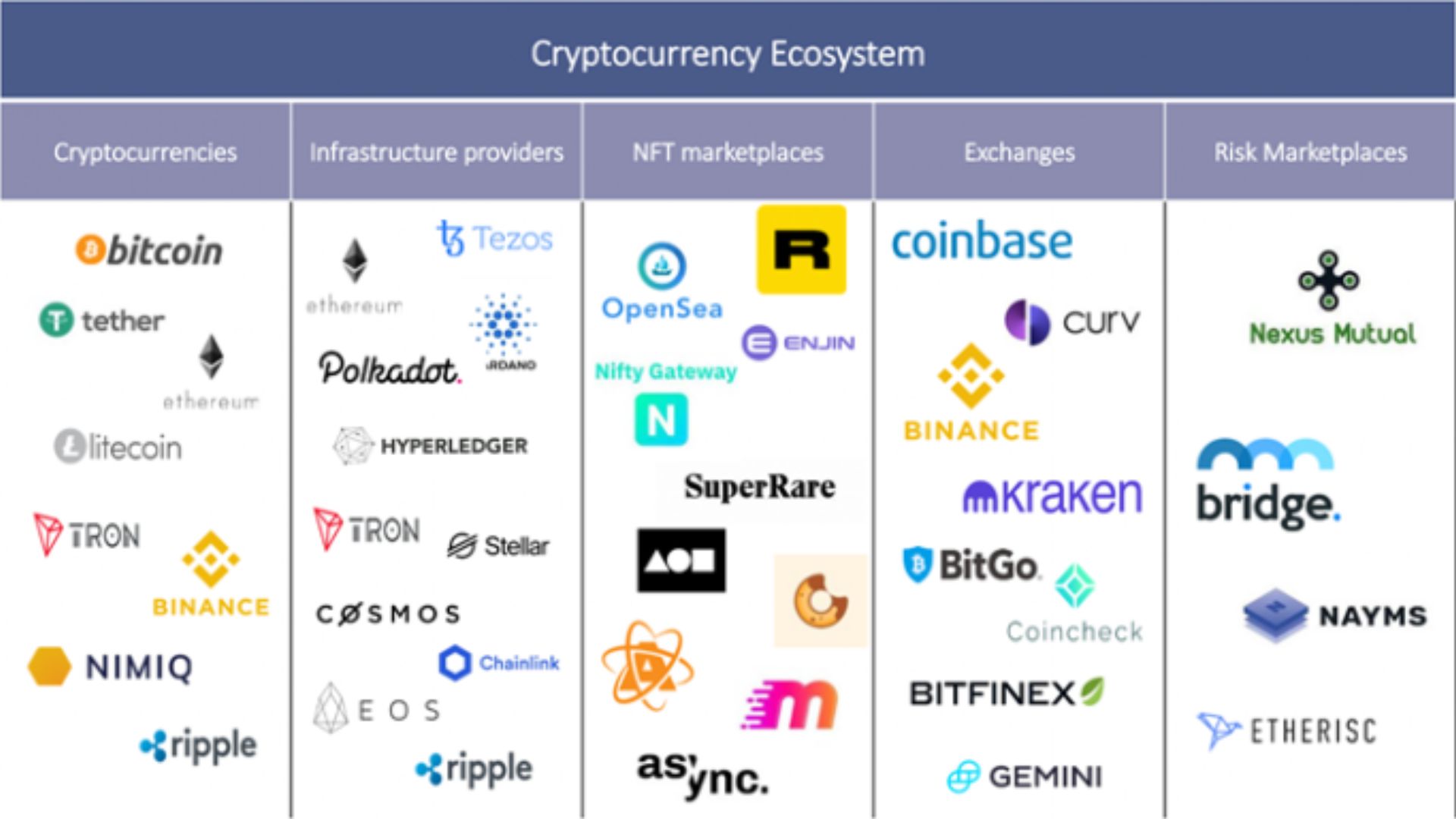
The mining capitulation sends signals throughout the cryptocurrency market. Investors interpret difficulty reductions as indicators of miner stress and reduced institutional confidence in bitcoin’s near-term profitability. This perception can influence price movements, which in turn affects mining economics in a cyclical manner.
However, the shift toward AI computing might ultimately benefit the broader cryptocurrency ecosystem by reducing environmental concerns. Bitcoin mining has faced persistent criticism regarding energy consumption and environmental impact. If miners transition capital toward artificial intelligence infrastructure—which has legitimate commercial applications beyond cryptocurrency—the narrative around crypto energy usage may shift. This could reduce regulatory pressure on cryptocurrency mining and improve the industry’s public perception.
Technological Innovation and Hardware Evolution
ASIC Development and Hardware Obsolescence
Application-specific integrated circuits (ASICs) represent the state-of-the-art in bitcoin mining hardware. These specialized chips are designed exclusively for performing the SHA-256 hashing computations required for bitcoin mining. Unlike general-purpose processors, ASICs achieve extraordinary efficiency but have no utility outside of cryptocurrency mining.
The ASIC market operates on a relentless innovation cycle. Manufacturers release new generations every 12-18 months, each offering improvements in hash rate (computational power), energy efficiency, or both. This creates a persistent challenge for mining operators: yesterday’s cutting-edge hardware becomes today’s obsolete equipment. Operators must continuously invest in upgrades to remain competitive, or their equipment’s profitability declines as the network difficulty potentially increases due to more efficient competitors deploying newer hardware.
The mining capitulation partly reflects the substantial capital requirements imposed by this hardware evolution cycle. Rather than invest in new ASIC hardware with uncertain future profitability, some operators are choosing to reallocate capital toward GPU-based AI computing. While GPUs also require ongoing updates to remain competitive, the alternative revenue applications provide more optionality.
The GPU Market Advantage
Graphics processing units (GPUs) have become the primary hardware for artificial intelligence applications. Unlike ASICs, which serve only bitcoin mining, GPUs have enormous demand across scientific computing, data analytics, machine learning, and numerous other fields. This diversified demand creates a more stable market and better asset economics.
An operator holding GPU inventory faces many potential revenue streams, providing insurance against the volatility of any single market. If AI computing demand temporarily softens, they can shift toward other applications or maintain the hardware as a productive asset. This flexibility is attractive compared to ASIC hardware, which has no alternative use cases.
Energy Markets and Geopolitical Considerations
Electricity Costs and Regional Mining Shifts
Mining profitability is fundamentally dependent on electricity costs, which vary dramatically by region and time. Countries with abundant hydroelectric power (Iceland, parts of North America), geothermal energy (New Zealand), or other low-cost renewable sources attract mining operations. Conversely, regions with expensive grid electricity or constrained power supplies see mining operations relocate or shut down.
Recent global energy market disruptions—driven by geopolitical tensions, supply chain constraints, and the energy transition—have increased electricity costs in many traditional mining jurisdictions. This has accelerated the profitability crisis and hastened the mining capitulation in marginal operations. Operators in regions like Europe, where electricity prices have surged, have been particularly affected.
Interestingly, some operators are exploring alternative energy sources—installing solar farms or wind turbines to power mining operations. This approach improves long-term profitability but requires substantial upfront capital investment. The transition toward AI computing might be more attractive for operators lacking capital for energy infrastructure development.
Global Competition and Chinese Mining Impact
China historically dominated cryptocurrency mining, hosting vast operations powered by seasonal hydroelectric surplus. However, stringent government restrictions on crypto activities have pushed mining elsewhere. This geographic shift has had secondary effects on mining economics globally, as operations migrate to countries with different energy costs, regulatory environments, and climate conditions.
The exit of Chinese mining capacity from the network contributed to previous difficulty adjustments. The current 19.9% reduction likely reflects a combination of factors rather than any single cause, but the ongoing evolution of global mining geography remains relevant to understanding mining capitulation dynamics.
Future Outlook and Industry Evolution
Will Mining Capitulation Continue?
The trajectory of bitcoin mining depends on several interconnected variables: bitcoin price movements, electricity costs, hardware innovation cycles, and the growth rate of AI computing demand. If bitcoin’s price appreciates significantly, mining becomes more profitable and some operators may resume or maintain operations. Conversely, sustained high electricity costs could trigger further capitulation.
Most likely, the industry will experience a period of consolidation. Large, well-capitalized mining operations with access to cheap electricity will continue operating, while marginal players exit or transition to alternative activities. This consolidation could improve mining’s reputation by removing the least efficient, most environmentally damaging operations.
The Hybrid Mining and AI Model
Forward-looking mining companies are developing the hybrid model, maintaining sufficient bitcoin mining capacity to benefit from favorable periods while building substantial GPU infrastructure for artificial intelligence applications. This approach hedges against the volatility of any single market while leveraging existing infrastructure and expertise.
This evolution might represent the long-term trajectory for the mining industry: gradually transitioning from pure-play bitcoin mining toward diversified computational service provision. Mining facilities would become general-purpose data centers, deploying resources where profitability is highest while maintaining cryptocurrency operations as a component of a broader business.
Conclusion
The bitcoin mining capitulation, marked by a 19.9% difficulty reduction, represents a significant inflection point in the cryptocurrency industry. Rather than a crisis necessitating panic, it reflects rational economic decision-making by miners facing compressed margins and uncertain profitability. The pivot toward artificial intelligence and GPU computing provides an exit strategy for operators while potentially offering better long-term economics.
This transition will shape the future of cryptocurrency mining. As operations consolidate and the industry evolves toward hybrid models, we can expect more efficient networks, reduced environmental concerns, and improved industry economics. The mining capitulation is not the end of bitcoin mining—it’s the beginning of a more sophisticated, diversified computational economy where cryptocurrency networks and artificial intelligence infrastructure coexist as complementary systems.
For investors and observers, understanding these dynamics provides crucial context for evaluating cryptocurrency markets, mining company valuations, and the broader trajectory of blockchain technology. The current period, while challenging for miners, may ultimately strengthen both the bitcoin network and the broader technology infrastructure supporting next-generation computational services.
