



The cryptocurrency industry has long been divided between two competing visions: decentralized finance (DeFi) and traditional finance integration through blockchain technology. Recently, this ideological clash came to a head when Ark Invest publicly challenged Andreessen Horowitz (a16z) over its assertion that traditional financial institutions prefer blockchain solutions without the decentralized finance components. This confrontation highlights a fundamental disagreement about the future direction of financial innovation, cryptocurrency adoption, and the role that blockchain technology should play in the global financial system.
The dispute centers on a crucial question: Are traditional financial institutions genuinely interested in adopting blockchain technology, or are they specifically avoiding the decentralized finance aspects that make cryptocurrency revolutionary? Ark Invest’s response suggests that a16z’s position is both oversimplified and dangerously bearish on the transformative potential of DeFi platforms and decentralized applications. This article explores the nuances of this debate, examining the competing perspectives on blockchain adoption, the current state of cryptocurrency regulation, and what the future might hold for both traditional finance and decentralized systems.
The a16z Thesis: Why TradFi Prefers Blockchain Without DeFi
Andreessen Horowitz, one of the most influential venture capital firms investing in cryptocurrency and blockchain technology, has long maintained nuanced views on the future of finance. Their recent assertion that traditional financial institutions want
The cryptocurrency industry has long been divided between two competing visions: decentralized finance (DeFi) and traditional finance integration through blockchain technology. Recently, this ideological clash came to a head when Ark Invest publicly challenged Andreessen Horowitz (a16z) over its assertion that traditional financial institutions prefer blockchain solutions without the decentralized finance components. This confrontation highlights a fundamental disagreement about the future direction of financial innovation, cryptocurrency adoption, and the role that blockchain technology should play in the global financial system.
The dispute centers on a crucial question: Are traditional financial institutions genuinely interested in adopting blockchain technology, or are they specifically avoiding the decentralized finance aspects that make cryptocurrency revolutionary? Ark Invest’s response suggests that a16z’s position is both oversimplified and dangerously bearish on the transformative potential of DeFi platforms and decentralized applications. This article explores the nuances of this debate, examining the competing perspectives on blockchain adoption, the current state of cryptocurrency regulation, and what the future might hold for both traditional finance and decentralized systems.
Understanding this controversy requires examining not just the technical differences between centralized and decentralized approaches, but also the broader implications for financial innovation, institutional adoption, and the democratization of financial services. The outcome of this debate could shape the regulatory landscape for crypto assets, influence how traditional banks approach blockchain integration, and determine whether decentralized finance protocols become mainstream financial infrastructure or remain niche alternatives.
The a16z Thesis: Why TradFi Prefers Blockchain Without DeFi
Andreessen Horowitz, one of the most influential venture capital firms investing in cryptocurrency and blockchain technology, has long maintained nuanced views on the future of finance. Their recent assertion that traditional financial institutions want blockchain technology but specifically want to avoid decentralized finance represents a strategic analysis of market dynamics and institutional incentives.
Understanding the a16z Argument
The a16z perspective rests on a pragmatic observation: traditional finance institutions have significantly different incentives and risk tolerances than cryptocurrency-native startups and decentralized communities. According to this view, banks, investment firms, and financial service providers see genuine value in blockchain applications for specific use cases such as settlement efficiency, cross-border payments, supply chain verification, and immutable record-keeping. However, these same institutions are fundamentally threatened by the core promise of decentralized finance — namely, the ability to conduct financial transactions without intermediaries, gatekeepers, or traditional institutional oversight.
From a16z’s perspective, traditional financial institutions are naturally motivated to adopt blockchain technology in ways that preserve their existing power structures and profit margins. A centralized blockchain platform operated by a consortium of banks, for instance, could offer many of the efficiency benefits of blockchain without redistributing financial control away from established players. This reasoning suggests that crypto adoption in traditional finance will occur primarily through controlled, permissioned blockchain systems rather than through open, decentralized protocols.
The a16z thesis implicitly argues that the regulatory environment favors this outcome. Regulators worldwide have consistently expressed skepticism toward decentralized finance protocols that operate without clear institutional governance structures or KYC (Know Your Customer) procedures. Blockchain technology divorced from DeFi presents a less controversial path to institutional adoption, one that preserves regulatory oversight and institutional control while capturing some efficiency benefits of distributed ledger technology.
The Institutional Resistance to True Decentralization
Why would traditional institutions resist decentralized finance even if blockchain itself offers genuine value? The answer lies in the fundamental business model incompatibility. Traditional finance generates enormous profits from intermediation — from their position between savers and borrowers, from lending spreads, from custody services, and from their role as gatekeepers of financial access. DeFi platforms, by contrast, aim to eliminate these intermediaries entirely, allowing users to trade, lend, borrow, and invest directly with one another.
This represents an existential threat to traditional financial business models. A bank cannot simultaneously embrace decentralized finance protocols that disintermediate their core functions and maintain the profit margins that fund their operations. Therefore, the institutional logic suggests that traditional finance will push toward blockchain solutions that preserve institutional intermediation while capturing blockchain’s efficiency gains. This would look like blockchain-based settlement systems operated by banks, central bank digital currencies (CBDCs) that maintain monetary control, and permissioned blockchains where financial institutions retain gatekeeping power.
Ark Invest’s Counter-Argument: Why This Analysis Falls Short
Ark Invest, the investment firm founded by Cathie Wood, took issue with this characterization, arguing that the a16z thesis is both overly bearish on decentralized finance and dangerously simplistic in its understanding of how transformative technologies achieve mainstream adoption. Ark’s counter-argument challenges some fundamental assumptions underlying the a16z position.
The Innovation Adoption Curve and Disruptive Technology
Ark Invest’s primary objection centers on the historical pattern of how transformative technology disrupts incumbent industries. According to this perspective, a16z’s analysis underestimates the degree to which decentralized finance innovations will eventually force traditional institutions to adapt. History suggests that transformative technologies rarely succeed by asking permission from incumbents; instead, they succeed by creating superior alternatives that eventually become impossible to ignore.
Consider the pattern with previous financial innovations: electronic trading eventually displaced physical trading floors, online banking challenged branch-based retail banking, and mobile payment systems threatened traditional payment processors. In each case, incumbent institutions initially resisted the innovation, attempted to preserve their intermediary role, and eventually were forced to adapt or lose market share to more nimble competitors. Blockchain technology and decentralized finance protocols may follow this same pattern.
Ark’s argument suggests that a16z is incorrectly assuming that institutional resistance represents a permanent feature of the landscape. Instead, Ark contends that as DeFi protocols become more sophisticated, safer, and more user-friendly, they will attract increasingly significant portions of financial activity. Eventually, traditional institutions will be forced to adopt decentralized finance technologies not because they want to, but because their customers will demand access to the superior products and services that crypto-native platforms offer.
The Efficiency Gains of Genuine Decentralization
Another key element of Ark’s counter-argument involves the actual efficiency gains that true decentralization provides. Ark suggests that a16z underestimates the value that genuine decentralized finance creates through the elimination of intermediaries. When financial transactions can occur directly between parties on a blockchain platform without any intermediary taking a cut, the cost savings are substantial.
These cost savings accumulate in multiple directions. Users pay lower fees on DeFi platforms compared to traditional financial services. Financial services become available to the estimated 1.7 billion adults worldwide who remain unbanked or underbanked due to geography, politics, or economic barriers. Blockchain-based financial services operate twenty-four hours a day, seven days a week, without the operational constraints that limited traditional banking hours. Settlement occurs in minutes or seconds rather than days.
Ark’s position suggests that these efficiency advantages are so significant that they will inevitably drive adoption, regardless of incumbent institutional preferences. A DeFi platform that can offer lending services with significantly lower fees and faster settlement times than traditional banks creates genuine competitive pressure that institutions cannot ignore forever. Eventually, traditional finance institutions will either adopt these technologies or watch their customers migrate to crypto-native alternatives.
The Threat to a16z’s Own Interests
Ark also hints at a potential conflict of interest in a16z’s position. Andreessen Horowitz has made enormous investments in both blockchain companies and traditional finance ventures. The firm has established relationships with institutional investors and traditional financial leaders. A genuinely bullish position on decentralized finance might create tension with institutional partners who view DeFi as a threat. By arguing that traditional finance will adopt blockchain without full decentralization, a16z potentially protects its existing institutional relationships while still positioning itself as pro-crypto.
Ark’s counter-position suggests that a16z is being overly pragmatic and insufficiently ambitious about the transformative potential of cryptocurrency technology and decentralized finance innovations. From Ark’s perspective, the truly revolutionary future involves not institutional adoption of blockchain in ways that preserve their power, but rather the gradual disruption of institutional finance through superior decentralized alternatives.
The Current State of DeFi Adoption and Market Dynamics
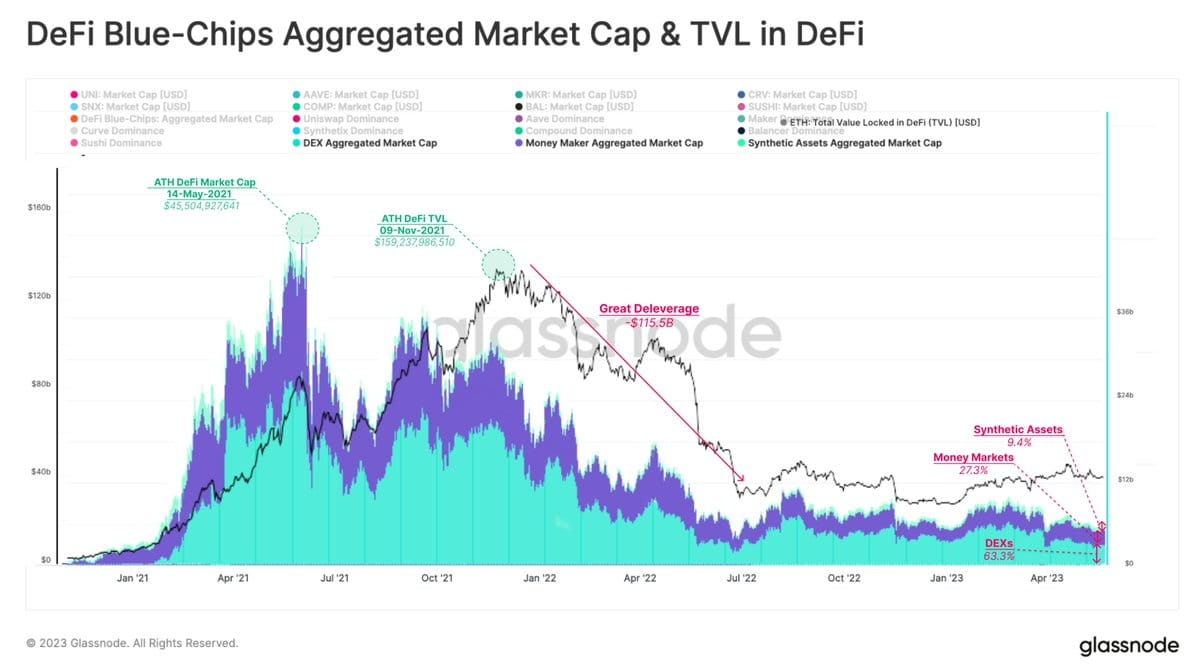
To evaluate this debate fairly, we must examine the current state of decentralized finance adoption, the sophistication of DeFi protocols, and the actual trajectory of institutional engagement with blockchain technology.
Real Growth in DeFi Despite Challenges
Despite significant volatility, security challenges, and regulatory uncertainty, decentralized finance has demonstrated genuine growth and increasing sophistication. DeFi platforms now facilitate billions of dollars in daily trading volume, lending, and other financial services. The diversity of DeFi protocols has expanded dramatically, offering everything from simple token swaps to complex derivatives, insurance mechanisms, and structured products.
This growth occurred largely without institutional participation, suggesting strong demand from retail users and crypto-native participants. The fact that DeFi has achieved this scale primarily through peer-to-peer adoption, rather than through institutional sponsorship, contradicts the a16z thesis that institutional approval is necessary for blockchain adoption. It suggests that decentralized finance may achieve critical mass through grassroots adoption before traditional institutions even develop meaningful engagement.
The Limitations of Current DeFi Systems
However, Ark Invest’s critics point out legitimate concerns about current DeFi infrastructure. User experience remains challenging for non-technical users. Security remains an ongoing concern, with smart contract vulnerabilities and exploits still occurring regularly. Regulatory uncertainty creates friction for institutional adoption. Decentralized finance protocols sometimes lack the consumer protections and guarantees that users expect from traditional financial institutions.
These limitations suggest that while the trajectory of DeFi is promising, the technology has not yet reached the maturity level where it can fully replace institutional financial services. This provides some support for the a16z argument that institutional adoption will proceed more quickly through permissioned blockchains and blockchain-based systems that preserve institutional controls.
The Institutional Blockchain Initiatives
Meanwhile, traditional institutions have indeed launched significant blockchain initiatives, but not always in the form a16z predicted. Some financial institutions have invested heavily in cryptocurrency exchanges, digital asset custody, and infrastructure that serves crypto markets rather than replacing them. Others have explored central bank digital currencies and blockchain-based settlement systems. These developments suggest a more nuanced reality where institutional adoption and decentralized finance growth are occurring in parallel rather than in direct competition.
The Regulatory Landscape and Its Impact on the DeFi vs TradFi Debate
The regulatory environment represents a crucial variable in determining which vision proves more accurate. Cryptocurrency regulation and DeFi regulation will largely determine whether decentralized finance protocols can achieve mainstream adoption or whether they remain constrained to niche use cases.
Current Regulatory Trends
Regulators worldwide have shown increasing interest in understanding and regulating cryptocurrency and blockchain technology. Most regulatory frameworks focus on institutional-style controls: licensing requirements, KYC procedures, anti-money laundering (AML) compliance, and consumer protection mechanisms. These requirements naturally favor institutional intermediaries who can afford compliance infrastructure over truly decentralized systems that lack clear operational entities to regulate.
This regulatory bias toward intermediaries supports the a16z thesis that traditional finance will dominate institutional adoption. However, regulators in some jurisdictions have begun developing regulatory frameworks specifically designed to accommodate decentralized finance through alternative approaches to compliance and consumer protection. If these experimental frameworks succeed, they could remove a major obstacle to institutional adoption of true DeFi protocols.
The Role of Stablecoins and Infrastructure
One area where we might expect to see convergence is in stablecoin infrastructure and basic blockchain-based payment systems. Both traditional institutions and DeFi communities recognize value in efficient, transparent, blockchain-based settlement systems for core financial functions. Development of robust stablecoin infrastructure could create the foundational layer upon which both institutional and decentralized applications build.
Synthesis: A More Complex Future Than Either Vision Suggests
The truth likely lies somewhere between the stark alternatives posed by a16z and Ark Invest. The future of finance will probably involve both institutional-controlled blockchain systems and genuinely decentralized finance protocols, operating in parallel and potentially in complementary ways.
Decentralized finance will likely continue growing among users who value its efficiency, accessibility, and the elimination of intermediaries. Blockchain technology adopted by institutions will provide them with operational efficiencies without requiring them to cede control. Rather than a winner-take-all scenario, financial innovation may proceed along multiple tracks simultaneously.
The real question may not be whether institutions prefer blockchain with or without decentralization, but rather whether the regulatory environment can develop frameworks that support both models. If regulation becomes so restrictive that DeFi cannot operate safely, Ark’s vision faces significant headwinds. Conversely, if regulation becomes flexible enough to accommodate decentralized protocols while protecting consumers, a16z’s assumption that institutions will inevitably dominate may prove too pessimistic.
Conclusion
The debate between Ark Invest and Andreessen Horowitz reflects a genuine disagreement about the trajectory of financial innovation and the future role of blockchain technology in global finance. A16z’s assertion that traditional finance prefers blockchain without DeFi contains significant merit from an institutional incentive perspective, while Ark Invest’s counter-argument that decentralized finance will ultimately prove too valuable to ignore also rests on historical patterns of technological disruption.
Rather than accepting either position wholesale, a more nuanced view recognizes that cryptocurrency adoption, blockchain implementation, and decentralized finance growth will likely proceed through multiple channels simultaneously. Institutional adoption of controlled blockchain systems will occur alongside grassroots expansion of DeFi protocols. The outcome will depend heavily on regulatory developments, technological maturation of DeFi platforms, and the degree to which users demand access to the efficiency and accessibility benefits that genuine decentralization provides.
What seems clear is that both blockchain technology and decentralized finance innovations represent genuine advances in financial infrastructure with real value propositions. The question is not whether they matter, but rather how they will integrate into the existing financial system and what balance will ultimately emerge between institutional and decentralized approaches to financial services.
