


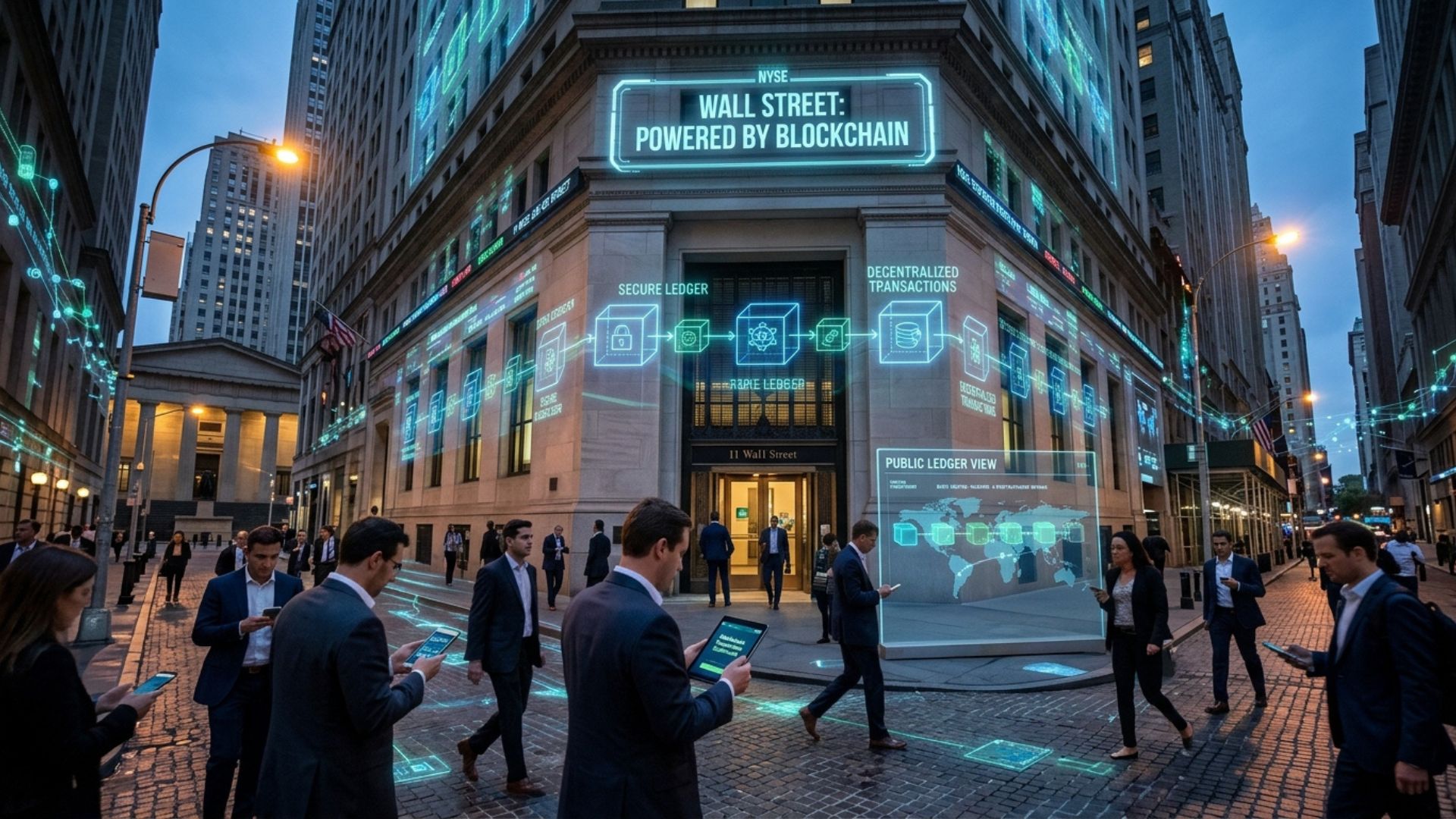
The financial world is undergoing one of the most significant technological transformations in modern history. From the rise of digital banking and online trading platforms to the emergence of cryptocurrencies and decentralized finance, innovation continues to reshape how money moves across the global economy. Now, a bold prediction from the CEO of Brickken has captured the attention of investors, financial institutions, and blockchain enthusiasts alike. According to the executive, Wall Street will run entirely on the blockchain by 2030.
While such a statement may sound ambitious, it reflects a growing belief that blockchain technology will become the foundation of future financial markets. Traditional systems used for trading, clearing, settlement, and asset management have remained largely unchanged for decades. These systems often involve multiple intermediaries, lengthy settlement times, high operational costs, and complex regulatory processes. Blockchain offers an alternative model capable of streamlining these functions while improving transparency, security, and efficiency.
Over the past few years, major financial institutions have increasingly explored blockchain-based solutions. Banks, asset managers, stock exchanges, and investment firms are investing billions into digital asset infrastructure and tokenization initiatives. The introduction of tokenized securities, smart contracts, and decentralized financial systems has accelerated discussions about the future of Wall Street.
The prediction that Wall Street could run entirely on blockchain by 2030 raises important questions. Is such a transformation technically possible? What role will tokenized assets play in future markets? How will regulators respond? And what opportunities and challenges lie ahead?
Understanding the Vision Behind a Blockchain-Powered Wall Street
The idea of Wall Street operating entirely on blockchain technology is based on the belief that distributed ledger systems can replace many of the traditional processes currently used in financial markets.Today, financial transactions typically require multiple parties to verify, process, and record information. Brokers, clearing houses, custodians, banks, and regulators all play roles in ensuring transactions are completed accurately. While these systems have proven reliable, they can be slow, expensive, and operationally complex.
Blockchain technology introduces a shared and immutable ledger where transactions are recorded transparently and verified through consensus mechanisms. Instead of relying on separate databases maintained by multiple institutions, all participants can access a synchronized record of ownership and transactions.
This vision extends beyond cryptocurrencies. It includes stocks, bonds, real estate, commodities, private equity, and other financial instruments existing as digital assets on blockchain networks. If implemented at scale, blockchain could fundamentally alter how Wall Street operates, reducing inefficiencies while creating new opportunities for investors and institutions.
Why Blockchain Is Attracting Wall Street’s Attention
Enhanced Transparency and Trust
One of the primary reasons blockchain technology is gaining traction within financial markets is its ability to provide unprecedented transparency. Every transaction recorded on a blockchain becomes part of a permanent and auditable ledger. This creates a clear trail of ownership and activity that can be reviewed by authorized participants. For financial institutions, transparency can improve compliance, reduce fraud risks, and strengthen investor confidence. These benefits are particularly valuable in markets where trust and accountability are essential.
Faster Settlement Times
Traditional stock transactions often require multiple days to settle fully. Despite advances in technology, many securities still operate under settlement cycles that introduce delays and operational risks. Blockchain-based settlement systems can significantly reduce settlement times by enabling near-instant transaction verification and execution. This efficiency can improve liquidity and lower counterparty risk across financial markets. The prospect of real-time settlement is one of the most compelling reasons financial institutions continue exploring blockchain infrastructure.
Reduced Operational Costs
The global financial system spends billions of dollars annually on reconciliation, administration, compliance, and transaction processing. By automating many of these functions through smart contracts, blockchain technology can reduce operational expenses while increasing efficiency. Lower costs benefit both institutions and investors, making blockchain adoption an attractive long-term proposition for Wall Street.
The Rise of Tokenized Assets
What Is Asset Tokenization?
Asset tokenization refers to the process of converting ownership rights in real-world assets into digital tokens recorded on a blockchain. These assets can include stocks, bonds, real estate, investment funds, artwork, commodities, and even intellectual property. Each token represents a specific ownership interest that can be transferred and traded digitally. Tokenization is widely viewed as one of the most transformative applications of blockchain technology because it bridges traditional finance and digital infrastructure.
Why Tokenization Matters
The tokenization of assets has the potential to unlock trillions of dollars in value by improving liquidity and accessibility. Traditionally, many assets are difficult to trade due to regulatory restrictions, geographic limitations, or high minimum investment requirements. Tokenized assets can be divided into smaller units, allowing broader participation from investors worldwide. This increased accessibility could fundamentally reshape investment markets and expand opportunities for both retail and institutional investors.
Brickken’s Role in the Tokenization Industry
Brickken has emerged as a notable player within the tokenization sector, focusing on helping businesses digitize ownership structures and create tokenized investment opportunities. The company’s leadership believes tokenization will become a central component of future financial markets. The prediction that Wall Street will run on blockchain by 2030 aligns with this broader vision of digital asset adoption and infrastructure modernization.
How Blockchain Could Transform Wall Street Operations

Trading and Market Infrastructure
Blockchain technology has the potential to modernize trading systems by enabling direct peer-to-peer transactions. Current trading infrastructure relies on numerous intermediaries and complex back-office processes. Blockchain-based systems can streamline these operations through automated verification and settlement mechanisms. This transformation could create more efficient markets while reducing friction associated with traditional trading workflows.
Clearing and Settlement Processes
Clearing houses play a critical role in ensuring financial transactions are completed successfully. However, these institutions also contribute to settlement delays and operational complexity. Blockchain can automate many clearing functions through smart contracts that execute predefined conditions automatically. As a result, financial institutions could process transactions more quickly while reducing administrative overhead and operational risks.
Asset Custody and Ownership Records
Maintaining accurate ownership records is a fundamental requirement of financial markets. Blockchain provides a secure and tamper-resistant method for recording ownership information. Digital ledgers can eliminate inconsistencies across multiple databases while improving data integrity. Enhanced recordkeeping capabilities may encourage broader adoption among financial institutions seeking more efficient asset management solutions.
Institutional Adoption Is Already Underway
Major Banks Embracing Blockchain
Many leading global banks are actively exploring blockchain technology. Financial giants have launched blockchain research initiatives, digital asset platforms, and tokenization projects designed to improve operational efficiency. These developments indicate that blockchain is no longer viewed solely as a cryptocurrency-related innovation. Instead, it is increasingly recognized as a foundational technology with the potential to transform traditional finance.
Investment Firms Entering Digital Assets
Asset managers and investment firms are also expanding their involvement in blockchain-related opportunities. The growing popularity of tokenized securities, digital asset funds, and blockchain infrastructure investments demonstrates rising institutional interest. As adoption accelerates, blockchain technology could become deeply integrated into mainstream financial markets.
Regulatory Progress Supporting Innovation
Regulators around the world are gradually developing frameworks for digital assets and blockchain-based financial services. Clearer regulations can provide institutions with the confidence needed to invest in blockchain infrastructure and launch innovative products. Regulatory progress will likely play a crucial role in determining how quickly Wall Street transitions toward blockchain-powered systems.
Challenges to Achieving a Blockchain-Based Wall Street
Regulatory Complexity
Despite growing momentum, regulatory uncertainty remains one of the biggest obstacles to blockchain adoption. Financial markets operate within highly regulated environments, and transitioning critical infrastructure to blockchain will require extensive oversight and coordination. Governments must balance innovation with investor protection while ensuring market stability.
Scalability Concerns
For blockchain to support Wall Street-level transaction volumes, networks must handle enormous amounts of activity efficiently. Although blockchain scalability has improved significantly, further technological advancements may be necessary before widespread adoption becomes practical. Developers continue working on solutions designed to increase transaction throughput while maintaining security and decentralization.
Integration With Existing Systems
Wall Street’s infrastructure consists of decades-old systems that support trillions of dollars in daily transactions. Replacing or integrating these systems with blockchain technology presents significant technical and operational challenges. The transition is likely to occur gradually rather than through an immediate replacement of existing infrastructure.
The Role of Smart Contracts in Financial Markets
Smart contracts are self-executing agreements stored on blockchain networks. These contracts automatically perform actions when predefined conditions are met. In financial markets, smart contracts can automate dividend payments, trade settlements, compliance procedures, loan agreements, and other processes. The ability to eliminate manual intervention while ensuring accuracy makes smart contracts one of blockchain’s most valuable innovations. As adoption increases, smart contracts could become a core component of future Wall Street operations.
Decentralized Finance and Traditional Finance Convergence
The growth of decentralized finance (DeFi) has demonstrated how financial services can operate without traditional intermediaries. While DeFi and Wall Street have historically existed as separate ecosystems, the gap between them is narrowing. Traditional institutions are increasingly exploring blockchain-based financial products, while DeFi platforms continue introducing innovations that attract mainstream attention. This convergence could accelerate blockchain adoption and support the vision of a more interconnected financial ecosystem by 2030.
What Wall Street Could Look Like in 2030
If Brickken CEO’s prediction proves accurate, Wall Street in 2030 could look dramatically different from today’s financial landscape. Stocks may exist as tokenized assets traded around the clock on blockchain networks. Settlement could occur instantly rather than taking days. Ownership records may be stored on transparent digital ledgers accessible in real time.
Investors could gain access to a broader range of global opportunities through fractional ownership and tokenized markets. Financial institutions might rely heavily on automated smart contracts to manage transactions, compliance, and reporting requirements. Although the exact path remains uncertain, the direction of innovation suggests blockchain will play an increasingly important role in shaping the future of finance.
Conclusion
The prediction that Wall Street will run entirely on the blockchain by 2030 reflects the growing momentum behind blockchain technology and digital asset innovation. While significant challenges remain, including regulatory hurdles, scalability concerns, and infrastructure integration, the financial industry is already moving toward greater blockchain adoption.
The rise of asset tokenization, digital securities, smart contracts, distributed ledger technology, and decentralized finance demonstrates how blockchain is transforming traditional financial systems. Major institutions are investing heavily in these technologies, recognizing their potential to improve efficiency, transparency, and accessibility.
Whether Wall Street becomes fully blockchain-based by 2030 remains to be seen. However, the trend toward digital financial infrastructure appears increasingly inevitable. As technology continues to evolve, blockchain may become one of the defining forces shaping the next generation of global capital markets.
