


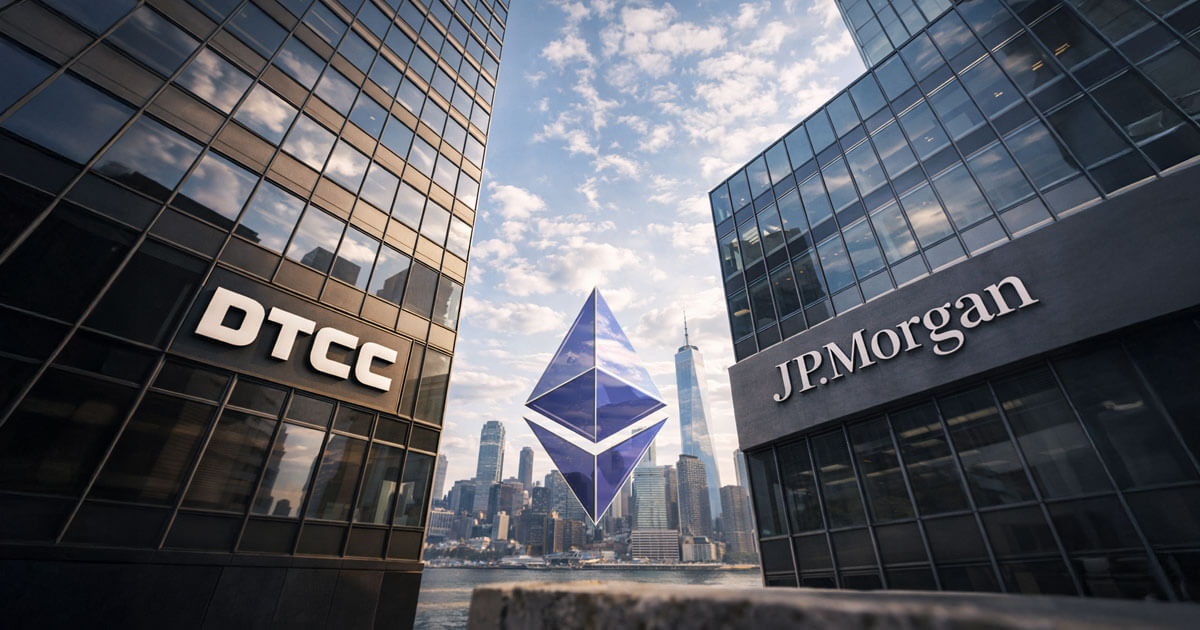
DTCC pilots tokenized shares with BlackRock, Goldman Sachs, and JPMorgan, and this development could reshape how securities are issued, traded, and settled in modern financial markets. For decades, global markets have relied on centralized systems, multiple intermediaries, and lengthy settlement cycles. Today, blockchain technology and distributed ledger systems are presenting a faster and more transparent alternative that could improve the way financial infrastructure operates.
This pilot is significant because it brings tokenization into mainstream finance. Rather than remaining a niche concept associated only with crypto markets, tokenized securities are now being tested by some of the world’s largest financial institutions inside regulated market structures. If the pilot proves successful, it could help reduce settlement times, lower operational costs, and simplify recordkeeping across the financial system.
What Is DTCC?
Understanding the Role of DTCC in Global Markets
The Depository Trust & Clearing Corporation, better known as DTCC, is one of the most important institutions in the U.S. financial system. It processes and settles trillions of dollars in securities transactions every day, including stocks, bonds, exchange-traded funds, and mutual funds. DTCC plays a critical role in helping markets function smoothly by confirming ownership, clearing trades, and reducing settlement risk.
Although traditional market infrastructure is dependable, it can also be slow and costly. A single trade may pass through several systems before it is fully settled, and that process often requires financial firms to spend significant time and money on reconciliation, reporting, and custody. These inefficiencies have long been accepted as part of the market structure, but they also create opportunities for improvement.
DTCC is now exploring whether blockchain can improve this process without compromising security, compliance, or reliability. That is why the DTCC pilots tokenized shares initiative is drawing so much attention from the financial industry.
What Are Tokenized Shares?
A Simple Explanation of Tokenized Securities
Tokenized shares are digital versions of traditional securities that are recorded on a blockchain or distributed ledger. Each token represents ownership in a real-world asset such as a stock, fund, or bond. The underlying asset still exists within the regulated financial system, but the ownership record is transferred to a digital ledger that can be updated more efficiently.
This is very different from cryptocurrencies such as Bitcoin. Tokenized shares are linked to regulated assets and must comply with securities laws. In other words, they combine the legal framework of traditional finance with the speed, transparency, and automation potential of blockchain technology. Tokenization may help markets settle faster, reduce manual processing, and improve transparency. Over time, it could also make it easier to design new financial products and expand access to investment opportunities.
Why BlackRock, Goldman Sachs, and JPMorgan Joined the Pilot
Institutional Adoption Is Growing
The participation of BlackRock, Goldman Sachs, and JPMorgan shows that tokenization is no longer just an idea promoted by startups or blockchain enthusiasts. It is now being treated as a serious institutional strategy by some of the most influential firms on Wall Street.
BlackRock brings enormous asset-management scale and growing experience with digital assets. Goldman Sachs contributes deep expertise in trading, market structure, and product development. JPMorgan adds long-standing experience in blockchain, payments, and institutional finance. Together, these firms can test how tokenized shares might function under real market conditions.
Their involvement also gives the pilot greater credibility because these institutions manage massive volumes of assets and transactions. In addition, their participation suggests that Wall Street sees long-term value in blockchain-based market infrastructure and is willing to explore how it can fit into the future of finance.
How the DTCC Tokenization Pilot Works
Exploring Blockchain-Based Securities Infrastructure
The pilot does not replace the current market system. Instead, it examines how blockchain can be integrated into existing infrastructure in a practical and regulated way. In the pilot, selected assets are represented as digital tokens on a shared ledger, allowing authorized participants to verify ownership, transfer assets, and reconcile records using the same source of truth.
Because all approved participants can access synchronized data, the process may become faster, more accurate, and less prone to errors. This shared visibility can reduce the need for repeated checks across separate systems and may improve the efficiency of post-trade operations.
The pilot also explores the use of smart contracts. These are self-executing programs that carry out actions automatically when specific conditions are met. For example, a smart contract could automate settlement steps or trigger a corporate action without requiring as much manual intervention.
Even so, the pilot must still operate within existing legal and regulatory frameworks. Compliance remains a central part of the project, and any practical implementation will need to meet the standards expected in regulated financial markets.
Why Tokenized Shares Matter for Financial Markets
Faster Settlement
Traditional securities trades often take time to settle, which can expose market participants to counterparty risk. Blockchain-based systems could shorten that timeline and make settlement more efficient.
Lower Costs
Financial firms spend heavily on reconciliation, custody, and reporting. Tokenization could automate some of these tasks and reduce operating expenses over time.
Better Transparency
A shared ledger makes it easier to track ownership and audit transactions. This can improve trust, strengthen oversight, and simplify compliance processes.
More Efficient Recordkeeping
Because the ledger updates in real time, firms may spend less time matching records across different systems and more time focusing on core business activities. Taken together, these advantages suggest that tokenized securities could make capital markets more efficient and more adaptable in the years ahead.
How Blockchain Supports Tokenized Securities
Why Distributed Ledger Technology Matters
The success of tokenized shares depends heavily on blockchain technology and distributed ledger systems. Unlike a central database controlled by one institution, a distributed ledger shares records across approved participants. Every update must follow consensus rules before it becomes final, which helps create a more reliable and transparent system.
This structure can improve resilience and reduce dependence on a single central authority. It also uses cryptography to protect transaction data and prevent unauthorized changes, which is especially important in financial markets where trust and accuracy are essential. For financial institutions, blockchain is not only about innovation. It is also about building a more efficient and modern infrastructure for regulated markets that must handle large volumes of transactions securely
How Smart Contracts Could Change Securities Markets
Automation Can Reduce Manual Work
Smart contracts are one of the most practical features of blockchain technology. They can automate tasks that normally require manual processing, which may reduce delays and lower the risk of human error. In securities markets, smart contracts could help with dividend payments, corporate actions, collateral management, settlement instructions, compliance checks, and ownership transfers. By handling these processes automatically, firms may save time and reduce operational risk. In large and complex markets, even small efficiency gains can create major cost savings. That is why smart contracts are seen as one of the most promising tools in the move toward tokenized financial infrastructure.
Regulatory and Technical Challenges
What Still Needs to Be Solved
Despite the promise of tokenized shares, several important challenges remain before they can be widely adopted. One of the biggest issues is regulation. Authorities must determine how tokenized securities fit into existing laws, especially in areas such as custody, settlement, investor protection, and reporting. Another challenge is interoperability. Different blockchain systems must be able to communicate with one another if tokenized markets are going to scale effectively. If platforms cannot work together, adoption will likely slow down.
Cybersecurity is also a major concern. Financial institutions must protect digital assets from hacking, fraud, and technical failures, all of which could undermine confidence in the system. In addition, large-scale adoption will take time because market participants need assurance that tokenized systems are stable, secure, and legally sound. For these reasons, the DTCC pilots tokenized shares project is important not only because it tests new technology, but also because it helps answer the practical questions that will determine whether tokenization can succeed in real markets.
What This Means for Investors
The Long-Term Impact Could Be Significant
For most investors, the DTCC pilot will not change everyday trading immediately. However, it could influence the future of investing in meaningful ways. If tokenized shares become widely adopted, investors may benefit from faster settlement, lower costs, and more transparent ownership records.
In the long term, tokenization could also support new investment products and broader market access. It may eventually make it easier for financial institutions to design more flexible and efficient ways to hold and transfer assets. Still, investors should remember that this is an early-stage development. The technology is promising, but it must prove itself in real-world financial markets before it can become a standard part of the system.
Conclusion
The fact that DTCC pilots tokenized shares with BlackRock, Goldman Sachs, and JPMorgan is a major signal for the financial industry. It shows that blockchain is moving beyond experimentation and into the core of institutional finance.
If the pilot succeeds, tokenized securities could make markets faster, cheaper, and more transparent. However, regulation, security, and interoperability will ultimately determine how quickly adoption grows and how far the technology can go. For now, the pilot represents an important step toward a more digital financial system. It may not transform markets overnight, but it could help define the next generation of securities infrastructure.
FAQs
Q. What are tokenized shares?
Tokenized shares are digital representations of traditional securities recorded on a blockchain or distributed ledger.
Q. Why is DTCC testing tokenized shares?
DTCC is testing tokenized shares to see whether blockchain can improve settlement speed, transparency, and efficiency in financial markets.
Q. Are tokenized shares the same as cryptocurrencies?
No. Tokenized shares represent regulated financial assets, while cryptocurrencies are separate digital assets.
Q. How could tokenized shares help investors?
They could reduce settlement times, improve transparency, and lower some market costs over time.
Q. Will tokenized shares replace traditional stocks?
Not soon. Tokenized shares are more likely to work alongside traditional systems before any full transition happens.
