


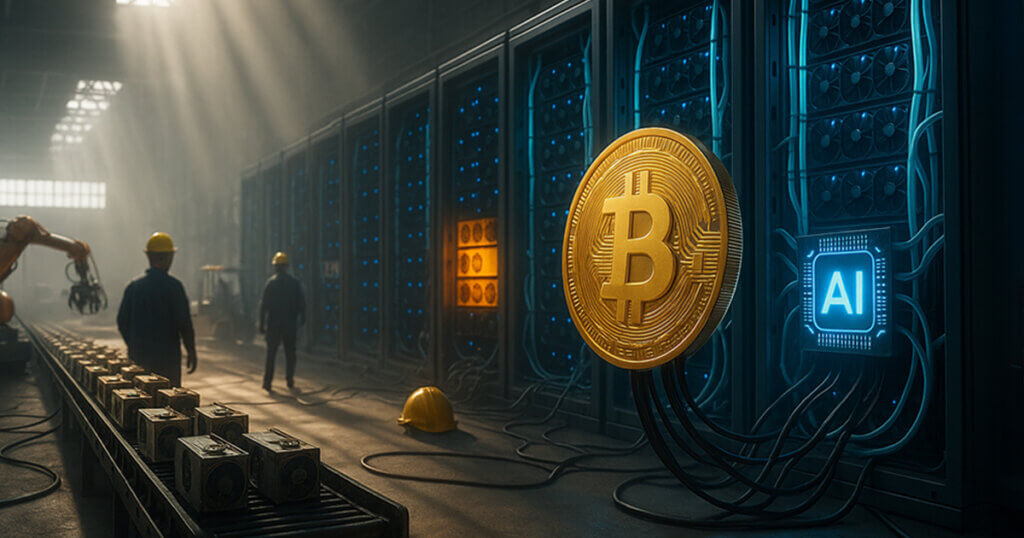
The rapid rise of artificial intelligence has triggered one of the largest infrastructure expansions in modern technology history. As AI companies race to build larger models and deploy increasingly powerful computing systems, demand for electricity and data center capacity has skyrocketed. Amid this transformation, an unexpected group is emerging as one of the biggest beneficiaries: Bitcoin miners.
According to Bernstein, Bitcoin mining companies are evolving into what can be described as “power landlords” in the AI era. Rather than relying solely on cryptocurrency mining revenue, these firms are leveraging their extensive energy infrastructure, land assets, and power agreements to support the growing needs of AI and high-performance computing (HPC) operators. This strategic shift could dramatically increase profitability while creating entirely new business models.
The convergence of Bitcoin mining, AI data centers, and energy infrastructure is reshaping the technology landscape. As artificial intelligence continues to expand globally, miners who once focused exclusively on validating blockchain transactions are discovering valuable opportunities in hosting AI workloads. This evolution could redefine the future of the crypto mining industry and establish a powerful connection between two of the world’s most transformative technologies.
The Growing Demand for AI Infrastructure
Artificial intelligence is becoming increasingly integrated into businesses, consumer applications, healthcare, finance, manufacturing, and scientific research. Training advanced AI models requires enormous computational resources, creating unprecedented demand for data centers and electricity. The development of large language models, generative AI systems, and machine learning applications depends heavily on graphics processing units (GPUs) and specialized hardware. These systems consume substantial amounts of energy and require sophisticated cooling systems to operate efficiently.
As major technology companies compete to expand their AI capabilities, they face a critical challenge: securing reliable access to power. Building new power infrastructure often takes years due to regulatory approvals, construction timelines, and grid limitations. Consequently, organizations are searching for existing facilities that already possess the energy capacity needed to support AI operations. This is where Bitcoin miners enter the picture. Many mining firms have spent years acquiring energy contracts, developing power facilities, and constructing data center infrastructure. These assets are now becoming highly valuable in the AI-driven economy.
Why Bitcoin Miners Are Perfectly Positioned
Existing Power Infrastructure Creates a Competitive Advantage
One of the biggest strengths of Bitcoin miners is their direct access to electricity. Successful mining operations require large amounts of power, leading companies to establish facilities near energy sources and negotiate favorable electricity agreements.
As AI developers seek locations capable of supporting energy-intensive computing clusters, mining companies already possess many of the required resources. Their sites often include substations, transmission access, cooling systems, and large-scale operational facilities.
Unlike organizations starting from scratch, Bitcoin miners can repurpose or expand existing infrastructure. This significantly reduces development timelines and makes them attractive partners for AI companies seeking rapid deployment.
Strategic Locations Enhance Value
Many mining facilities are situated in regions with abundant energy supplies and relatively low electricity costs. These locations were originally selected to maximize cryptocurrency mining profitability but are now proving equally attractive for AI workloads.
The availability of affordable power is becoming one of the most important factors in data center site selection. As a result, mining companies with established operations in energy-rich regions are gaining strategic advantages that extend beyond cryptocurrency.
Understanding the “Power Landlord” Model
Bernstein’s description of miners as “power landlords” reflects a significant shift in how these companies generate revenue. Traditionally, Bitcoin miners earned income by solving complex cryptographic problems and receiving Bitcoin rewards. Revenue depended heavily on Bitcoin prices, mining difficulty, and energy costs. This created substantial earnings volatility. Under the power landlord model, miners can lease infrastructure, power capacity, and facilities to AI operators. Instead of relying exclusively on cryptocurrency market conditions, they gain access to more stable, long-term revenue streams.
This transformation mirrors the evolution seen in other industries where asset owners generate recurring income by leasing critical infrastructure. In the case of Bitcoin miners, electricity access and data center capacity become highly valuable commodities. As AI demand continues to grow, companies controlling large power resources may enjoy increasing pricing power and stronger financial performance.
The Revenue Opportunity for Bitcoin Mining Companies
Diversification Beyond Cryptocurrency

One of the most significant benefits of AI partnerships is revenue diversification. The cryptocurrency industry is known for its cyclical nature. Mining profitability can fluctuate dramatically based on market conditions. By serving AI clients, miners can reduce dependence on Bitcoin prices and establish additional income sources.
Long-term hosting agreements with AI companies may provide predictable cash flows, helping stabilize earnings during periods of cryptocurrency market weakness. This diversification strategy is attracting considerable attention from investors who value business models with recurring revenue characteristics.
Higher Returns on Existing Assets
Many mining companies already own valuable infrastructure that can be adapted for AI applications. Rather than investing in entirely new facilities, they can optimize existing assets to serve both mining and AI workloads. This approach improves capital efficiency and increases returns on infrastructure investments. Facilities that once generated income solely from Bitcoin mining can now support multiple revenue-generating activities. As demand for AI computing continues expanding, utilization rates may increase, creating additional profitability opportunities.
The Connection Between AI and Energy Demand
Electricity Becomes the New Digital Commodity
The AI revolution is transforming electricity into one of the most important resources in the technology sector. Every AI model requires vast amounts of computing power for training and inference. As model complexity increases, energy consumption rises accordingly. This has sparked intense competition for reliable power supplies.
Bitcoin miners understand energy markets better than many technology companies because electricity has always been central to their business operations. Their experience managing power costs, negotiating contracts, and operating energy-intensive facilities provides a valuable advantage. In many ways, the future success of AI may depend as much on electricity availability as on technological innovation itself.
Grid Constraints Create Opportunities
Many regions are experiencing increasing pressure on electrical grids due to growing AI infrastructure requirements. Building new generation capacity often takes years, creating supply constraints. Bitcoin miners with existing power allocations can offer immediate solutions. Their facilities may already possess the electrical capacity needed to support AI deployments, making them attractive partners for technology firms seeking rapid expansion. This dynamic strengthens the value proposition of mining infrastructure and supports Bernstein’s optimistic outlook for revenue growth.
Major Bitcoin Miners Embracing the AI Trend
Several leading Bitcoin mining companies have already begun exploring AI and high-performance computing opportunities. These firms recognize that their infrastructure assets can support more than cryptocurrency operations. Some miners are converting portions of their facilities into AI-ready data centers, while others are pursuing partnerships with cloud providers and AI developers. These initiatives demonstrate a broader industry trend toward infrastructure diversification.
Investors increasingly evaluate mining companies not only based on Bitcoin production metrics but also on their ability to capitalize on AI-related opportunities. Companies with significant power resources and scalable facilities may command higher valuations as a result. The market is beginning to view certain miners as hybrid infrastructure providers rather than pure cryptocurrency businesses.
Challenges Facing the Transition
Infrastructure Upgrades Are Necessary
Although Bitcoin mining facilities possess valuable assets, AI workloads often require specialized infrastructure. Advanced GPUs generate significant heat and may require enhanced cooling systems. AI data centers also demand different networking capabilities, security measures, and operational standards. Mining companies pursuing AI opportunities must invest in upgrades to ensure their facilities meet customer requirements. While these investments can be substantial, the potential revenue benefits may justify the expense.
Competition Continues to Intensify
The AI infrastructure market is attracting participants from multiple industries. Traditional data center operators, cloud providers, utilities, and infrastructure investors are all seeking to capitalize on growing demand. Bitcoin miners must differentiate themselves through power availability, cost efficiency, location advantages, and operational expertise. Success will depend on execution, strategic partnerships, and the ability to adapt facilities to evolving AI requirements.
How Investors View the Opportunity
Investors are increasingly interested in companies positioned at the intersection of AI and energy infrastructure. The market recognizes that power availability is becoming a critical constraint for AI growth. Mining firms with substantial energy resources may therefore possess strategic assets that extend beyond cryptocurrency operations.
Bernstein’s analysis highlights the possibility that AI-related revenue could become a meaningful contributor to mining company earnings. This prospect has encouraged investors to reevaluate the long-term potential of certain mining stocks. Rather than being viewed solely as Bitcoin proxies, some miners are emerging as infrastructure plays connected to the broader AI ecosystem.
The Future of Bitcoin Mining in the AI Era
The relationship between Bitcoin mining and artificial intelligence is likely to deepen over the coming years. As AI adoption accelerates, demand for power-rich facilities will continue increasing. Mining companies that successfully transition into infrastructure providers may enjoy stronger financial performance, diversified income streams, and enhanced market valuations. Their ability to leverage existing assets creates a unique advantage that few industries can replicate.
The concept of miners acting as power landlords reflects a broader shift in how digital infrastructure is valued. Access to electricity, land, and operational expertise is becoming just as important as computing hardware. As technology companies compete for energy resources, Bitcoin miners may find themselves occupying a central position in the AI economy.
Conclusion
The emergence of Bitcoin miners as “power landlords” represents one of the most significant developments in the intersection of cryptocurrency and artificial intelligence. According to Bernstein, miners possess valuable energy infrastructure that can support the rapidly expanding needs of AI data centers and high-performance computing operations.
By leveraging existing power agreements, strategic locations, and operational expertise, mining companies are creating new revenue opportunities beyond traditional cryptocurrency activities. This shift not only reduces reliance on Bitcoin market cycles but also positions miners to benefit from one of the most powerful technology trends of the decade.
As AI demand continues to surge, the importance of electricity and infrastructure will only grow. Bitcoin miners that successfully embrace this transformation could become key enablers of the AI revolution while unlocking substantial long-term revenue growth.
