


The cryptocurrency industry continues to evolve at a rapid pace, with blockchain networks competing to offer faster transactions, lower fees, and improved scalability. Among the newer blockchain ecosystems gaining attention is Sui, a Layer-1 blockchain designed to provide high-speed transactions and support decentralized applications at scale. However, recent operational challenges have placed the network under intense scrutiny after the Sui blockchain suffers more downtime following Thursday’s six-hour outage, raising concerns among investors, developers, and users alike.
Network uptime is one of the most critical indicators of a blockchain’s reliability. Whether supporting decentralized finance (DeFi), non-fungible tokens (NFTs), gaming platforms, or enterprise applications, uninterrupted network performance is essential for maintaining user confidence. When a blockchain experiences prolonged outages or repeated disruptions, questions naturally arise regarding its infrastructure, decentralization, validator performance, and long-term sustainability.
The latest incidents involving Sui have reignited discussions about blockchain resilience and the technical challenges associated with scaling modern decentralized networks. While many blockchain ecosystems have experienced outages during their growth phases, repeated downtime events can influence market sentiment and impact adoption rates.
Understanding the Sui Blockchain
Before analyzing the recent disruptions, it is important to understand what makes Sui unique within the blockchain landscape. Sui is a high-performance Layer-1 blockchain developed to support large-scale decentralized applications and digital asset ecosystems. Built using the Move programming language originally developed by Meta for the Diem project, Sui focuses on delivering high throughput, low latency, and enhanced scalability.
One of the network’s primary selling points is its ability to process transactions in parallel. Unlike traditional blockchain architectures that execute transactions sequentially, Sui employs an object-centric data model that allows many transactions to be processed simultaneously. This design aims to improve transaction speeds while maintaining security and efficiency. The blockchain has attracted significant interest from developers building Web3 applications, gaming projects, NFT platforms, and decentralized finance protocols. However, maintaining network stability is just as important as achieving high performance.
The Six-Hour Outage That Triggered Concerns
The blockchain community was caught off guard when Sui experienced a significant outage that lasted approximately six hours. During this period, transaction processing was disrupted, preventing users from conducting normal on-chain activities. The outage quickly became a major topic of discussion across crypto communities, social media platforms, and industry forums. Developers, validators, and ecosystem participants worked to diagnose the issue and restore normal network operations.
A six-hour interruption is particularly significant because blockchain networks are expected to operate continuously without centralized oversight. Unlike traditional financial systems that can schedule maintenance windows, decentralized networks are designed to remain operational around the clock. The incident highlighted the complexities involved in maintaining a high-performance blockchain infrastructure. As transaction volumes increase and decentralized applications become more sophisticated, the technical demands placed on blockchain networks continue to grow.
For many observers, the most concerning aspect was not only the duration of the outage but the fact that the Sui blockchain suffers more downtime following Thursday’s six-hour outage, suggesting deeper reliability challenges that may require further investigation and improvements.
Why Blockchain Downtime Matters
Impact on User Trust
Trust is a foundational element of any blockchain ecosystem. Users expect decentralized networks to provide uninterrupted access to financial services, digital assets, and decentralized applications. When network outages occur, users may lose confidence in the platform’s ability to support mission-critical activities. This can lead to reduced engagement, lower transaction volumes, and hesitation among new users considering the ecosystem. Repeated downtime can amplify these concerns, making reliability a central issue for stakeholders.
Effects on Developers
Developers rely on stable infrastructure to build and maintain applications. Every outage can disrupt smart contracts, delay transactions, and negatively impact user experiences. Projects operating on affected blockchains may face operational challenges, including delayed payments, failed transactions, and interrupted application functionality. As a result, developers often consider network reliability when choosing a blockchain platform for long-term deployment.
Market Sentiment and Investor Confidence
Cryptocurrency investors closely monitor network performance metrics. Significant outages can trigger concerns about technical vulnerabilities and governance effectiveness. When investors perceive a blockchain network as unstable, market sentiment may weaken. This can influence token prices, liquidity, and ecosystem growth. The recent incidents involving Sui have prompted investors to reassess the network’s operational resilience and future prospects.
Possible Causes Behind the Recent Downtime
Validator Coordination Challenges
Blockchain networks rely on validators to maintain consensus and process transactions. If validators encounter synchronization issues, network performance can deteriorate rapidly. In some cases, software bugs, configuration errors, or communication failures among validators can contribute to outages. As blockchain ecosystems scale, coordinating validator operations becomes increasingly complex, requiring robust infrastructure and effective governance mechanisms.
Software Bugs and Protocol Issues
Even the most advanced blockchain networks are susceptible to software-related challenges. Complex protocols often undergo continuous upgrades and improvements. Occasionally, unexpected interactions within the codebase can trigger network instability. When a critical bug affects consensus mechanisms or transaction validation processes, network operations may be disrupted until developers identify and resolve the issue.
Network Congestion
High transaction volumes can sometimes stress blockchain infrastructure. Although Sui was specifically designed to handle large-scale transaction processing, sudden spikes in activity may expose weaknesses in system architecture or validator capacity. Network congestion has historically contributed to outages across multiple blockchain ecosystems, emphasizing the importance of scalability under real-world conditions.
Infrastructure Dependencies
While blockchains are decentralized, they still depend on various infrastructure components such as nodes, validators, networking services, and cloud resources. Failures within these supporting systems can create cascading effects that impact overall network performance. Understanding and mitigating infrastructure dependencies remains a critical challenge for blockchain developers worldwide.
How Sui’s Outages Compare to Other Blockchain Networks
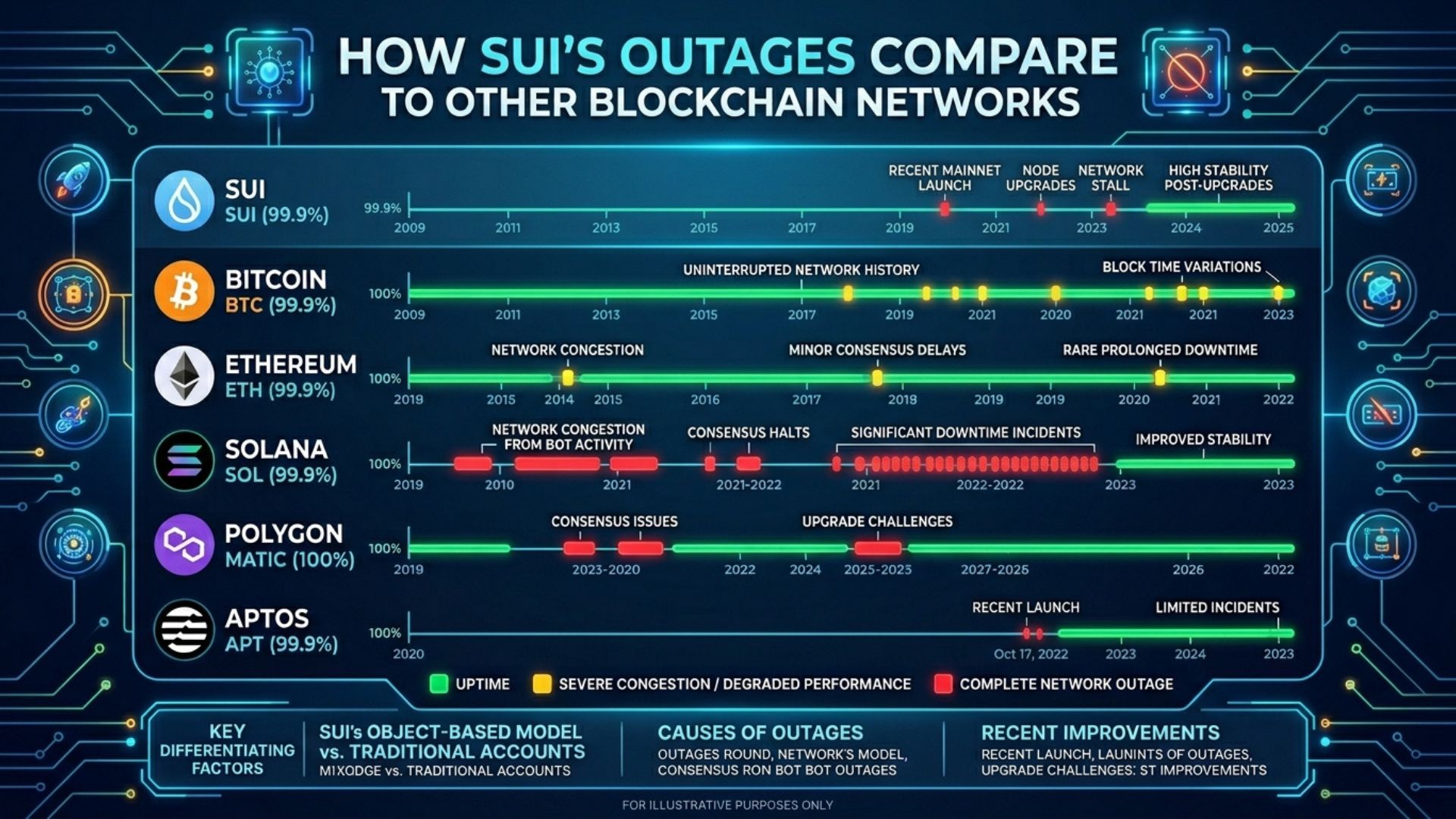
The challenges facing Sui are not unique within the cryptocurrency industry. Several major blockchain networks have experienced outages or performance disruptions during periods of rapid growth. As blockchain technology continues to evolve, maintaining both scalability and reliability remains a difficult balancing act.
Historically, networks prioritizing speed and throughput have occasionally encountered operational challenges as they scale. These incidents often serve as learning opportunities, prompting protocol upgrades and infrastructure improvements. What distinguishes successful recovery efforts is the ability of development teams and validators to identify root causes, implement fixes, and strengthen network resilience against future disruptions. For Sui, the recent outages represent an important test of the network’s maturity and ability to adapt to evolving demands.
Community Reactions to the Sui Downtime
User Frustration
Many users expressed frustration after being unable to access decentralized applications, execute trades, or transfer assets during the outages. For active traders and DeFi participants, even brief interruptions can have financial consequences, especially during periods of market volatility. As a result, transparency and communication from blockchain teams become essential during outage events.
Developer Feedback
Developers within the ecosystem have called for comprehensive technical explanations and detailed post-mortem reports. Transparent communication helps maintain confidence by demonstrating that network operators understand the issue and are taking corrective action. any community members believe that openly addressing technical challenges strengthens the ecosystem in the long run.
Industry Analysis
Industry analysts have viewed the outages as a reminder that blockchain innovation often comes with growing pains. While scalability advancements are important, reliability remains a key benchmark for evaluating the long-term viability of any blockchain platform. The recurring nature of the disruptions has led some analysts to question whether additional infrastructure upgrades may be necessary.
Potential Long-Term Impact on the Sui Ecosystem
Adoption Challenges
The fact that the Sui blockchain suffers more downtime following Thursday’s six-hour outage may influence adoption decisions among developers and enterprises. Organizations evaluating blockchain solutions typically prioritize stability alongside performance and cost efficiency. Repeated outages could slow ecosystem growth if concerns remain unresolved.
Competitive Pressure
The blockchain industry is highly competitive, with numerous Layer-1 networks competing for users and developers. Reliability issues may create opportunities for competing platforms to attract projects seeking more stable infrastructure. To remain competitive, Sui must demonstrate its ability to deliver both scalability and consistent uptime.
Governance and Infrastructure Improvements
One positive outcome of outages is that they often accelerate improvements. Network operators may introduce new monitoring systems, validator requirements, redundancy measures, and protocol enhancements to strengthen resilience. Such improvements can ultimately make the network more robust and capable of supporting future growth.
Lessons for the Broader Blockchain Industry
The recent events surrounding Sui offer valuable lessons for the wider blockchain sector. First, scalability alone is not enough. Blockchain networks must balance performance with reliability to ensure long-term success. Second, transparency during incidents plays a crucial role in maintaining community trust. Users and developers expect clear communication regarding the causes of outages and the steps being taken to prevent future occurrences.
Third, continuous testing and infrastructure optimization are essential. As blockchain ecosystems expand, new stress scenarios emerge that may not have been anticipated during initial development. Finally, decentralization remains a critical factor in network resilience. Diverse validator participation and robust governance structures can help mitigate risks associated with operational failures.
What Happens Next for Sui?
The path forward for Sui will depend largely on how effectively the network addresses the underlying causes of its recent downtime. Developers are expected to conduct thorough investigations, publish technical analyses, and implement corrective measures designed to prevent similar incidents in the future.
Validator operators will likely review network configurations and operational procedures to enhance reliability. Meanwhile, users and investors will closely monitor future network performance to determine whether the ecosystem can maintain stable operations over the long term.
If Sui successfully resolves these challenges and strengthens its infrastructure, the network may emerge more resilient than before. However, continued disruptions could increase skepticism and hinder adoption efforts. The coming months will therefore be crucial in shaping perceptions of the blockchain’s reliability and future growth potential.
Conclusion
The fact that the Sui blockchain suffers more downtime following Thursday’s six-hour outage has intensified discussions about network reliability, scalability, and operational resilience. While outages are not uncommon in the rapidly evolving blockchain industry, repeated disruptions can impact user trust, developer confidence, and ecosystem growth.
Sui remains an innovative Layer-1 blockchain with ambitious goals and advanced technical architecture. However, maintaining consistent uptime is essential for achieving widespread adoption and competing effectively within the crowded blockchain market. The recent incidents serve as a reminder that blockchain development involves ongoing challenges, particularly when balancing speed, scalability, and decentralization. How Sui responds to these issues will play a significant role in determining its future position within the cryptocurrency ecosystem.
