



The global financial markets are experiencing significant turbulence as geopolitical tensions continue to escalate, sending shockwaves through traditional asset classes. While equities, bonds, and commodities face mounting pressure from a war-driven selloff, an intriguing narrative is unfolding in the cryptocurrency market. Bitcoin, the world’s leading digital currency, has demonstrated remarkable resilience by holding steady near the $63,800 level, even as institutional investors and retail traders flee riskier assets in search of safe havens.
This divergence raises compelling questions about Bitcoin’s role as a hedge against geopolitical uncertainty and market volatility. Historically, investors have turned to gold and government bonds during periods of global instability, yet this time, digital assets are capturing significant attention. The cryptocurrency space, often dismissed as purely speculative, is proving its mettle during one of the most challenging periods in recent market history. Understanding why Bitcoin holds firm while traditional markets crumble requires a deeper examination of market dynamics, investor psychology, and the evolving perception of digital currency as a legitimate asset class.
The contrast between crypto market performance and traditional finance performance has never been more pronounced. As we explore this phenomenon, we’ll examine the underlying factors driving Bitcoin’s strength, the broader implications for cryptocurrency adoption, and what this means for investors seeking portfolio diversification during uncertain times.
Why Bitcoin Outperforms During Market Turmoil
The Flight to Digital Alternatives
When traditional markets falter, investors typically follow one of two paths: they retreat into ultra-safe assets like U.S. Treasury bonds and precious metals, or they seek alternative investments that offer potential upside despite market chaos. In recent weeks, Bitcoin has positioned itself as an attractive middle ground—a decentralized asset that operates independently from government-influenced monetary policy and geopolitical conflicts.
The appeal of Bitcoin as a hedge lies in its fundamental architecture. Unlike stocks tied to companies affected by economic sanctions or trade disruptions, and unlike bonds whose values fluctuate with interest rates, Bitcoin operates on a peer-to-peer network that transcends political boundaries. This unique characteristic has earned it the nickname “digital gold” among crypto enthusiasts, though its comparison to precious metals is increasingly nuanced. While gold prices tend to rise during safe-haven demand, Bitcoin combines that protective quality with the growth potential that appeals to forward-thinking investors worried about long-term currency devaluation.
The cryptocurrency market’s independence from traditional financial systems is particularly appealing when geopolitical risks create uncertainty about government stability or currency strength. Investors in regions facing economic sanctions or currency instability have long understood this benefit, but now, even institutional investors in stable countries are reconsidering their allocation strategies. The digital asset landscape offers something that traditional portfolios cannot: a completely decentralized store of value that cannot be frozen, seized, or devalued through political decree.
Institutional Adoption and Confidence
The stability of Bitcoin near $63,800 also reflects growing institutional adoption of cryptocurrency. Over the past several years, major financial institutions have begun integrating Bitcoin into their portfolios, and this trend accelerated during the recent market uncertainty. Exchange-traded funds (ETFs) tracking Bitcoin have attracted billions in capital from institutional investors seeking exposure to the crypto market without the operational complexity of direct ownership.
This institutional confidence is not based on speculation but on careful analysis of Bitcoin’s value proposition during macroeconomic stress. Unlike retail investors who might panic during volatility, institutional players have the analytical resources to evaluate cryptocurrency fundamentals and market dynamics. Their continued investment in Bitcoin during a market selloff sends a powerful signal to other investors that digital currency deserves serious consideration as part of a diversified portfolio.
Furthermore, the blockchain technology underlying Bitcoin has matured considerably. Network security has never been stronger, regulatory clarity around cryptocurrency has improved in many jurisdictions, and the infrastructure for digital asset custody and trading has become increasingly robust. These developments have reduced the perceived risk associated with Bitcoin investment, making it more attractive to conservative institutions that were previously skeptical of the crypto asset class.
Market Dynamics: Traditional Assets Under Pressure
The Broader Selloff Affecting Equities and Bonds
The current market selloff represents a perfect storm of negative factors colliding with investor sentiment. Geopolitical tensions have created uncertainty about future economic growth, potential supply chain disruptions, and the possibility of inflation from military spending or reduced global trade. These concerns have triggered a cascade of selling across traditional asset classes.
Equity markets have been particularly hard hit, as investors worry about corporate earnings stability in an uncertain environment. Companies with significant international operations or exposure to supply chains dependent on conflict-affected regions face genuine headwinds. The stock market volatility has reflected these concerns, with broader indices declining sharply as defensive rotations take hold.
Paradoxically, bond markets have also suffered despite their traditional role as safe-haven assets. While longer-dated government bonds have benefited from flight-to-safety flows, the broader fixed income market has faced pressure from expectations that inflation could persist or even accelerate due to geopolitical disruptions. Additionally, many investors have reduced their exposure to bonds denominated in currencies from countries directly affected by military conflicts, creating trading opportunities but also significant losses for those caught on the wrong side of currency moves.
Commodity markets have experienced particularly acute volatility. Energy prices have spiked due to concerns about supply disruptions, while industrial metals have declined as investors downgrade their economic growth expectations. This commodity market turbulence reflects genuine uncertainty about how extended and severe the geopolitical crisis might become.
Why Traditional Safe Havens Prove Insufficient
Historically, gold and U.S. Treasury bonds have represented the ultimate safe havens during geopolitical crises. Yet in today’s complex financial environment, these traditional alternatives face limitations. Gold prices, while strong, offer limited upside potential and no income generation. Bond yields, even with recent price appreciation, remain modest and lock in returns that investors fear will be eroded by inflation.
Bitcoin, by contrast, offers something different: the downside protection of a hedge asset combined with the upside potential of an emerging asset class. For investors with longer time horizons, this combination proves compelling. The digital currency provides a way to maintain portfolio value while positioning for potential gains if global monetary authorities eventually lose credibility or if cryptocurrency adoption accelerates as a response to geopolitical fragmentation.
Bitcoin’s Unique Position as Geopolitical Insurance

Decentralization as a Strategic Advantage
The foundation of Bitcoin’s resilience during market turmoil is its fundamental design: a decentralized network that no single government or institution can control. This feature, which many traditional financiers once dismissed as irrelevant or even dangerous, has become increasingly valued as geopolitical risks rise.
When a country faces international isolation, imposed sanctions, or severe internal conflict, its citizens lose access to the traditional banking system and cannot freely transfer capital across borders. In these scenarios, Bitcoin becomes not just an investment but a lifeline. The cryptocurrency can be stored securely, transmitted instantly across borders without intermediaries, and exchanged for local currency through decentralized finance platformsthat operate globally.
This utility, while extreme, illustrates why Bitcoin has value beyond speculation. As geopolitical tensions persist, more investors—particularly those in geopolitically sensitive regions—have come to appreciate Bitcoin’s ability to serve as both a store of value and a medium of exchange that transcends political boundaries. This growing recognition has contributed to the steady Bitcoin price even as other assets crumble.
The Narrative of Digital Sovereignty
Beyond its technical attributes, Bitcoin has become embedded in a powerful narrative about financial sovereignty and protection from government overreach. As geopolitical tensions fuel concerns about currency manipulation, asset seizure, and economic warfare, this narrative gains credibility for an increasingly broad audience.
Investors who might never have considered cryptocurrency a decade ago now view Bitcoin as essential portfolio insurance against a world characterized by greater political fragmentation and economic uncertainty. This shift in perception has profound implications for the crypto market, transforming Bitcoin from a speculative asset primarily favored by technologists into a legitimate alternative investment vehicle for institutional and sophisticated retail investors.
The digital asset market has matured precisely as this narrative has strengthened, creating a virtuous cycle. As more mainstream institutions allocate capital to cryptocurrency, network effects strengthen, liquidity improves, and prices stabilize—all of which makes Bitcoin more attractive to additional investors considering their portfolio diversification strategies.
Cryptocurrency Market Strength Relative to Traditional Assets
The Decoupling Phenomenon
The most striking aspect of the current market environment is the decoupling of cryptocurrency from traditional assets. For years, Bitcoin and broader digital currencies moved in tandem with equities—they rose during risk-on periods and fell during risk-off periods. This correlation suggested that crypto assets were primarily speculative vehicles without independent value drivers.
The current market selloff is revealing something different. As equity markets have declined sharply, Bitcoin has held its ground, suggesting that at least some allocation of capital is flowing into digital assets rather than simply out of risk entirely. This indicates a genuine shift in how investors perceive Bitcoin’s role within a diversified portfolio.
The decoupling reflects several factors operating simultaneously. First, there is legitimate safe-haven demand from investors seeking geopolitical insurance. Second, there is technical buying from investors who have predetermined allocation targets and are rebalancing toward underweighted positions. Third, there is growing awareness among professional money managers that Bitcoin and traditional markets have genuine reasons to behave differently, particularly during geopolitical crises.
Relative Strength and Investment Appeal
Investors evaluating their options during the current market selloff face a choice between passive capital preservation and active portfolio optimization. Bitcoin, by holding its value while other assets decline, actually increases as a percentage of most portfolios. This means that investors who do nothing experience a rebalancing effect that increases their cryptocurrency exposure—a dynamic that reinforces the case for digital asset allocation.
Furthermore, the relative strength of Bitcoin during weakness in other assets has attracted new capital from investors convinced that the crypto market dynamics have fundamentally shifted. As the digital currency demonstrates resilience, it attracts media attention, analyst commentary, and institutional research—all of which drive further adoption and investment.
The cryptocurrency narrative has shifted from “highly speculative technology play” to “geopolitical hedge and diversification tool.” This reframing is not merely semantic; it represents a genuine reevaluation of the asset class by serious investors. When Bitcoin is evaluated as an alternative asset class similar to commodities or real estate, rather than as a speculative technology stock, its apparent current value becomes far more defensible.
Implications for Investors and Portfolio Strategy
Diversification Reconsidered
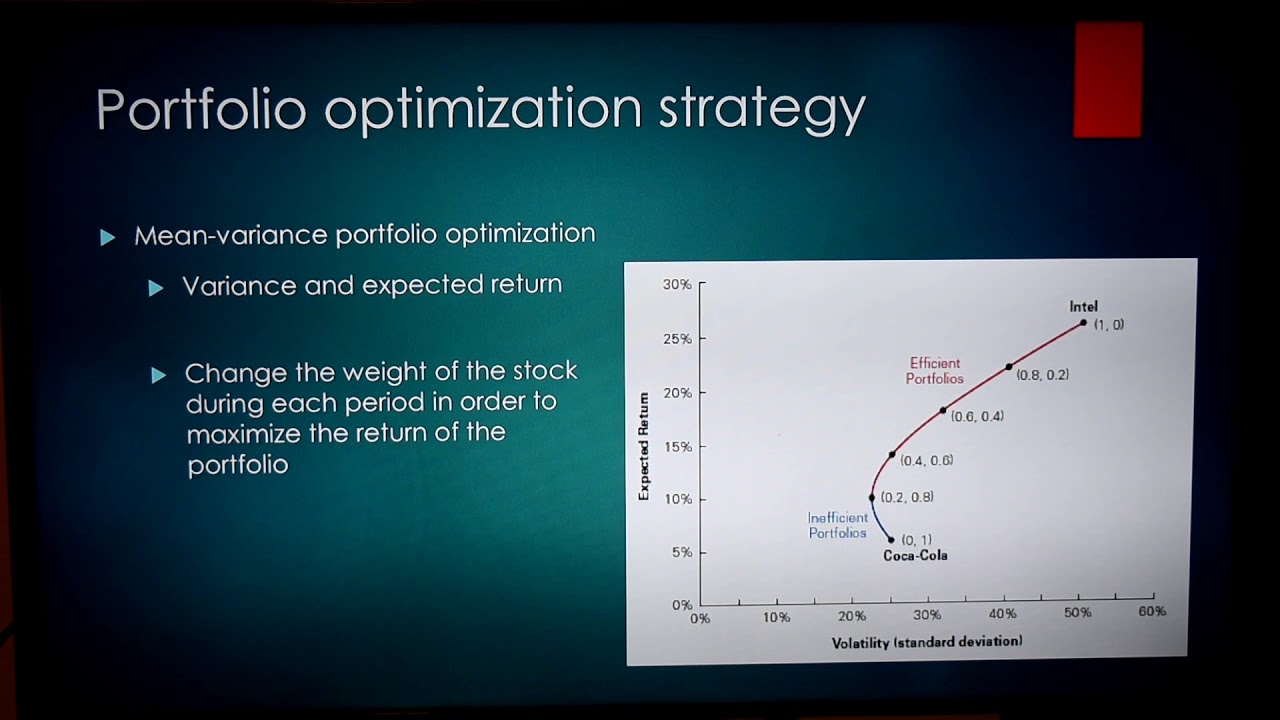
The current environment offers a practical lesson in portfolio diversification. Traditional allocation strategies that divided capital among stocks, bonds, and real estate proved insufficient during the recent market selloff because all three asset classes experienced pressure simultaneously. This lack of true diversification has prompted investors to reconsider their approach.
Bitcoin and the broader cryptocurrency market offer something that traditional asset classes do not: a digital asset that operates independently from government monetary policy, operates across borders without restriction, and has proven capable of appreciating during periods of economic uncertainty and geopolitical risk. While cryptocurrency is not an appropriate allocation for all investors, it may merit serious consideration for those with appropriate risk tolerance and investment horizons.
The optimal Bitcoin allocation varies by investor, but research suggests that even modest allocations—perhaps 2-5% of a portfolio—can meaningfully improve diversification without introducing excessive volatility. During strong market environments, this allocation provides ballast without significantly depressing returns. During market stress, it often holds value or appreciates, providing precisely the stability investors need most.
Risk Management in Uncertain Times
The current geopolitical environment has made risk management more critical than ever. Bitcoin appeals to risk-conscious investors not because it is low-volatility, but because its volatility stems from different factors than traditional assets. When equities decline due to earnings concerns, and bonds decline due to inflation expectations, Bitcoin may hold stable or rise due to safe-haven demand—creating genuine portfolio diversification benefits.
This distinction between volatility and risk is crucial for sophisticated investors. Bitcoin might be volatile in isolation, but it can actually reduce portfolio volatility when combined with traditional assets because of its low (or negative) correlation to equities and bonds. During the current market selloff, this relationship has been on vivid display.
Looking Forward: What the Current Dynamics Mean for Crypto
Long-Term Implications
The current market environment is accelerating a trend that was already underway: the normalization of cryptocurrency as a legitimate asset class worthy of institutional attention. As more investors survive a market selloff with Bitcoin holdings that held their value, skepticism about the digital asset will inevitably decline.
The next phase of cryptocurrency adoption will likely involve increasingly sophisticated institutional products, clearer regulatory frameworks, and broader acceptance of digital assets as a component of professionally managed portfolios. The current market conditions, while painful for investors exposed to traditional assets, are actually beneficial for long-term cryptocurrency adoption because they demonstrate the practical value of the asset class in real-world scenarios.
Evolving Market Dynamics
As geopolitical tensions persist and potentially intensify, investors will continue to evaluate their exposure to traditional assets and consider alternatives like Bitcoin. The cryptocurrency market has the capacity to absorb substantial institutional capital without significant disruption, particularly as digital asset infrastructure continues to mature.
The blockchain technology underlying Bitcoin will continue to improve, regulatory treatment will clarify, and use cases beyond pure investment will expand. In aggregate, these developments should support continued appreciation of Bitcoin and related digital assets, particularly in an environment characterized by geopolitical uncertainty and doubts about the resilience of traditional financial systems.
Conclusion
Bitcoin’s ability to hold near $63,800 while traditional markets face a war-driven selloff represents more than a temporary trading anomaly—it reflects a genuine shift in how serious investors perceive the digital currency and its role in a globally diversified portfolio. As geopolitical tensions persist and create uncertainty about the future of traditional currencies and government institutions, the case for Bitcoin as a geopolitical hedge and portfolio insurance becomes increasingly compelling.
The cryptocurrency market’s strength during the current downturn demonstrates that the asset class has matured beyond pure speculation. Digital assets now serve genuine diversification functions, offer legitimate safe-haven characteristics, and provide investors with exposure to a decentralized financial system that operates independently from the geopolitical conflicts affecting traditional markets.
For investors navigating these uncertain times, Bitcoin deserves serious consideration not as a replacement for traditional portfolios but as a meaningful component of a diversified investment strategy. While cryptocurrency will never be appropriate for all investors, those with appropriate risk tolerance and long-term perspectives may find that Bitcoin allocation provides precisely the combination of downside protection and upside potential that current market conditions demand.
The digital currency revolution that began as a fringe movement among cryptography enthusiasts has evolved into something far more significant: a legitimate alternative to traditional financial systems that offers genuine value during periods of geopolitical instability and macroeconomic uncertainty. As the world navigates increasingly complex challenges, Bitcoin and the cryptocurrency market will likely play an expanding role in how investors protect and grow their wealth.
